The challenge:
GSFC has large foreign exchange exposures, largely as a result of its high volume of imports ($220m) versus meagre exports ($8m) in 2014. The increased volatility in exchange rates, particularly USD/INR, meant the business was exposed to significant FX risk.
The company however was faced with a further problem. The competitiveness of the industry in India limited the chance for the GSFC treasury team to create a natural hedge and pass on any abnormal exchange variation losses to its pricing. Hedging costs through traditional products were rising and becoming increasingly burdensome given frequent changes in regulations related to exchange traded currency derivatives and other compliance obligations.
As Dilip Pathakjee, Chief (Finance) at GSFC explains: “The task was more challenging due to the small size of the team (four officers) having to manage a wide scope of treasury activities.”
The solution:
To resolve this problem, treasury set a number of objectives to not only insulate the business from volatility in the USD/INR exchange rates but also to optimise the cost of hedging. It also amended its foreign exchange risk management policy and practices to ensure compliance with the changes in regulatory provisions, establish a strong governance structure for monitoring FX risk management activities and also develop daily and quarterly MIS reports for key decision makers.
The treasury first set out to define its risk management policies and governance structure by developing a number of standard operating procedures that ensured a clear segregation of responsibilities and appropriate delegation of authorities. Within this framework, a new FX risk management policy was developed outlining standard practices for routine hedging activities by the front office, reducing the time spent on each transaction.
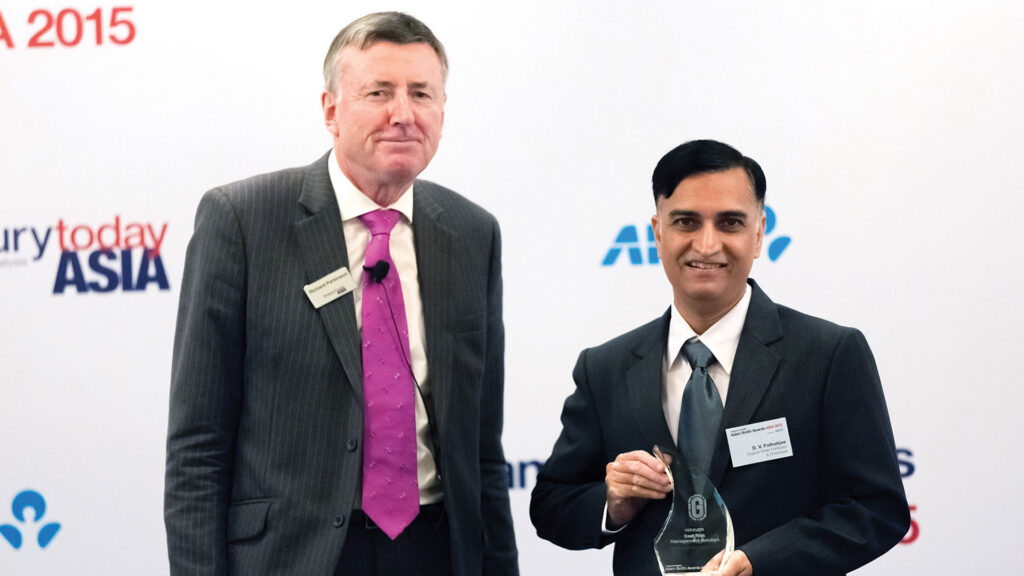
It’s a great recognition of the endeavours and an endorsement of our attempt to benchmark the risk management activities with the best international practices. It also motivates us to achieve all round excellence in Treasury Operations for fulfilling the aspirations of all direct and in-direct stakeholders.
For those more complex derivative structures it was decided that their use would only occur after a detailed discussion by the Financial Risk Management Committee, comprising the Chairman, Managing Director, Chief Finance Officer and also functional heads. These informed decisions are now aided by efficient use of information tools such as Reuters Eikon, NSE, BSE websites and interactions with peer groups such as Trading India, Global Markets Forum, banks and other treasury teams.
Further control would be obtained over the process through the creation of MIS reports that detail daily FX exposure, hedge positions, realised and MTM gains/losses and Value at Risk (VaR) for unhedged exposure. This report is submitted to CFO and CMD on a daily basis. Quarterly reports are also created (including exchange variations gains/losses on FX exposure and hedge positions, details of derivatives positions and so on) and these are submitted to the Board of Directors. The active participation and valuable suggestions from the members of the Board of Directors has helped achieve the targeted results.
Best practice and innovation:
With the well-organised FX risk management practices in place, treasury has been able to effectively insulate the business from external uncertainties.
As a result, treasury has delivered significant economic benefits. During periods of substantial INR depreciation against USD, the company shifted its hedging strategy from currency futures or forward contracts to call spread and ‘seagull’ option structures to reduce the hedging cost and to get potential benefit from probable INR appreciation. The savings have been around 25%.
Pathakjee concludes: “treasury has achieved the highest level of efficiency in FX by focusing on following major aspects of risk management strategies. The foreign exchange solutions developed by the company also break the myth that treasury operations can only be handled by a large team with significant investment.”