Debt management
The debt management vertical manages gross debt of $14 billion in various currencies, tenors and in various geographies. This involves the management of in excess of 120 different facilities from more than 50 different banks and institutions.
With the acquisition of its African businesses the company inherited fragmented working capital debt facilities of a short-term nature which it managed to refinance via benign longer-tenor debt. The debt taken on for the acquisition was also opportunistically refinanced and thus the company met its dual objectives of lengthening the tenor of the debt basket of the company and diversifying from bank credit facilities via a series of debt capital issuances totalling $5.3 billion in three different currencies in the last 18 months. These issuances include various industry firsts:
-
The first Indian telecom company issuance in USD and the biggest single tranche ($1.5 billion) by a telecom company in Asia.
-
The first emerging market telecom operator to issue Euro bonds.
-
The largest Swiss Franc issuance from India.
-
The first Asian telecom company to carry out a dual-currency issuance.
A well-crafted debt diversification and refinancing strategy was produced that included capital market issuances/bond issues, export credit agency funding and development finance institution facilities at low rates thus reducing interest costs for the Group.
The debt origination for all entities of the Group was centralised to ensure that the synergies of business aggregation and specialisation were harnessed, leading to reduction in interest costs, which was especially important for the volatile markets of Africa.
Relationship management was centralised globally to cut through the complexity of various stakeholders and ensure a single point of contact for lenders.
Risk management
The risk management unit is well integrated with the business and moves hand in hand with various strategic business initiatives. From the time of having a one-man front office and back office team, the risk management unit has evolved into a specialised team which constantly monitors and analyses the ever-changing economic variables and their impact on the financial risk profile of the company. The unit developed a synchronised method of risk identification, risk measurement and risk control. Using innovative ideas and market expertise, the unit has been able to take several cost-saving opportunities and contribute to the bottom line of the company. It is the role of the treasury to measure, analyse and hedge the risks facing the group, including commodity, political, sovereign, and counterparty risk. From this analysis, the treasury has developed a number of risk management solutions including cost-saving innovative hedging solutions. For example, the group used innovative cross-currency swaps and interest rate swaps to mitigate risk. These structures include offshore quasi-hedging of currencies in Africa and centralised onshore hedging of esoteric African currencies.
The key to the new risk management role that treasury plays is understanding the global macroeconomic environment and communicating the impact of this on the Group. In order to increase the agility of treasury decision-making Bharti Airtel has developed a market research wing for the company.
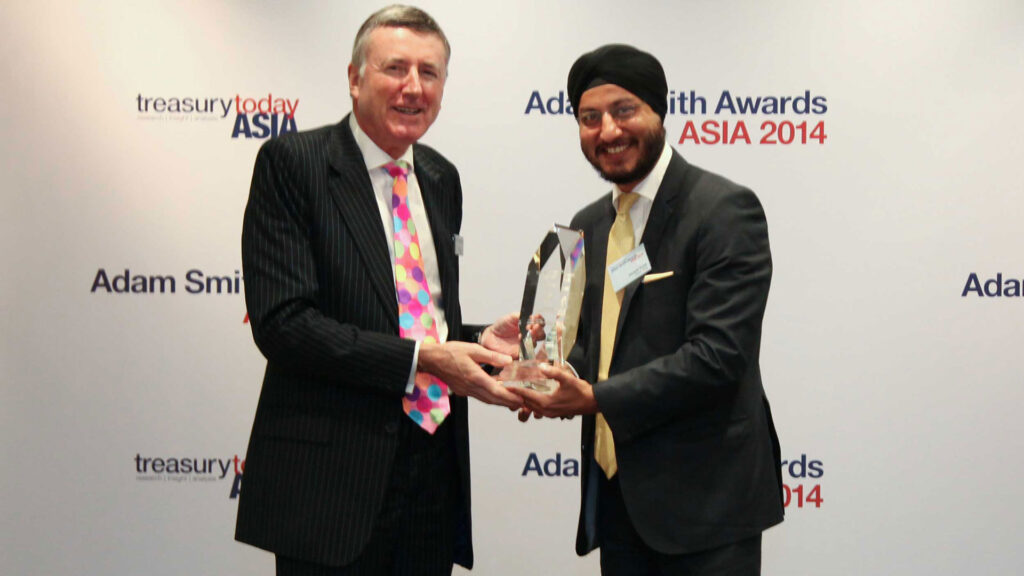
“Winning the Adam Smith Awards Asia Top Treasury Team 2014 is a great achievement for us. Obviously the team gets the right level of motivation and drive to continue to do better. But especially for companies like Airtel, which have been on an escalated growth path over the years, it allows us a way to benchmark capabilities, as one takes a pause and looks back. I also think the accolade adds accountability to the team to continue to strive well and raise the bar to retain such status – again a worthy motivation.”
Harjeet Kohli, Group Treasurer, Bharti Airtel
Winner, Top Treasury Team
Working capital management
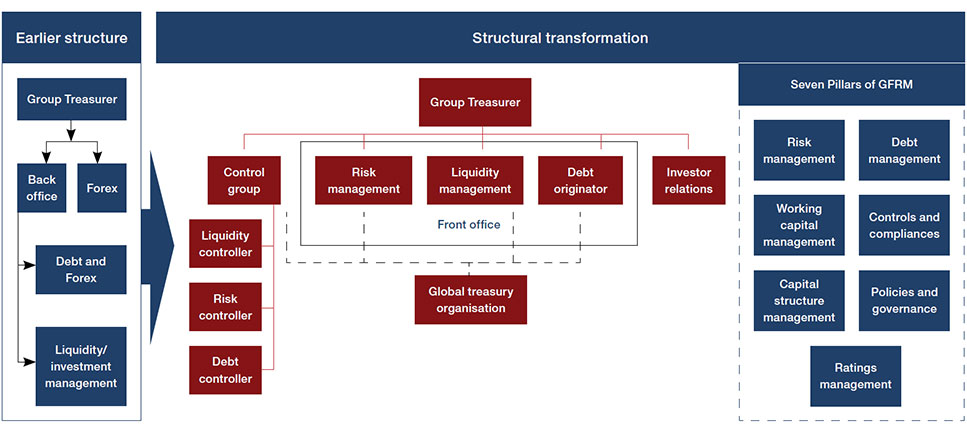
The change in treasury structure saw Bharti Airtel centralise its working capital management from its Africa HQ to Global Treasury HQ in New Delhi. This led to highly centralised working capital governance and liquidity solutions being implemented that have created cost savings for the company through a reduction in human resource costs.
Working capital governance was an important area of focus for the treasury and included the de-layering of financial information for each operating entity to calculate working capital metrics such as DPO, DSO and DIO. De-layering was carried out to calculate the amount of working capital stuck in different business units (prepaid versus post-paid versus interconnect businesses). The Group also focused on analytics around ideal cash conversion cycles and established working capital targets for the business to achieve. The focus on strong working capital governance also drove working capital optimisation targets in the key performance indicators (KPIs) of operating company finance teams.
The work of the treasury in this area has delivered multiple benefits including the creation of centralised cash forecasting and funding planning for all 20 operating entities and global fund channelisation from entities in surplus to entities in deficit. These liquidity solutions mean that the Bharti Airtel treasury now operates cash pooling structures that offer increased governance and optimisation of group investments, including channelling of funds for strategic initiatives such as acquisitions/sell-offs. In addition, the integrated host-to-host payments mandate delivery for 18 out of 20 operational entities has reduced transaction banking charges.
Efforts on trade finance and solutions such as distributor financing have been used to improve working capital metrics including unearned revenues from telecom distributors (unearned revenue is a vital source of working capital for prepaid telecom businesses). The group has also established relationships with strategic vendors to ensure optimisation of the credit period, thus improving DPO and at the same time ensuring payment governance on all 20 operating subsidiaries to actively tackle and prevent vendor overdue situations.
Ratings management
The treasury led a ratings assignment project with leading global rating agencies, looking at the company’s overall credit and issuances in the debt capital markets. In the last 12 months, the project has seen Bharti Airtel receive a rating upgrade to Investment Grade from S&P (BB+ to BBB-) and initiate ratings from Moody’s.
Capital structure management
The debt/equity mix of the Group’s entities is now managed by the treasury function. The department measures and ensures the optimisation of cost of capital for the company and has already driven well-orchestrated strategic initiatives such as Offer for Sale of Shares, Sale to Qualified Institutional Buyers and infusion of equity in subsidiaries basis need, to name a few.
Since assuming the role, the treasury team has led a 5% stake sale in Bharti Airtel to Qualified Institutional Buyer Qatar Endowment Foundation for $1.26 billion as a strategic long-term investment for the buyer. It also led a 4.5% stake sale in Bharti Infratel (a listed subsidiary of Bharti Airtel), which was oversubscribed 2.4 times, raising over $350m in August 2014.
Controls and compliance
Elsewhere, Bharti Airtel’s treasury has implemented a number of changes to successfully manage its global compliance needs, such as regulatory compliance (central banks/ministry of finance), counterparty compliance term sheets, repayment confirmations, ISDAs and internal compliance Board Resolutions, and Delegation of Authority compliance. The foundation of this was based on the global implementation of a new customised TMS to meet the emerging needs of the various treasury pillars.
In order to bring more control to the treasury, process controls have been update for both internal and external ways of working and a GFRM Standard Operating Procedure Manual has been developed to build in enhanced process efficiencies.
Policies and governance
The strengthening of the treasury governance architecture was formalised with the creation of a Treasury Governance Charter, established by the Treasury Management Committee. The objective was to increase senior management’s ownership of various projects – and other internal changes, such as standardisation of Delegation of Authorities and to centralise governance for all global entities.
Best practice and innovation
Change starts from within. And the structural, organisational and attitude change that the company’s treasury had undergone has allowed it to:
-
Partner with the business more effectively by providing treasury expertise in dealing with additional complexities, counterparties and expectations.
-
Capture the benefits of a global, centralised treasury and deliver it to global operations via cost savings, bank charge reductions, interest savings and improvement in working capital metrics.
-
Harness the synergies of intra treasury-units (via pillars) by making them specialise and yet co-exist.
This has been more than a transformational project for the treasury; it has been one for the company as a whole. It resonates with the entrepreneurial nature of the business and has resulted in concrete business impact, both tangible and intangible, in each pillar of the GFRM.
“This project supports innovation as it allows each of the seven pillars the freedom to explore new initiatives thus allowing each pillar to flourish in specialisation while they co-exist in a centralised global treasury architecture,” emphasises Kohli.
“Bharti Airtel has raised the bar with their project to transform treasury to a group funding, risk and markets function. They have addressed seven key pillars of treasury on their journey and their impressive deliverables and benefits make their treasury team a most worthy winner of our Top Treasury Team Asia 2014. Congratulations from the entire team here at Treasury Today Asia.”
Richard Parkinson, Managing Director, Treasury Today