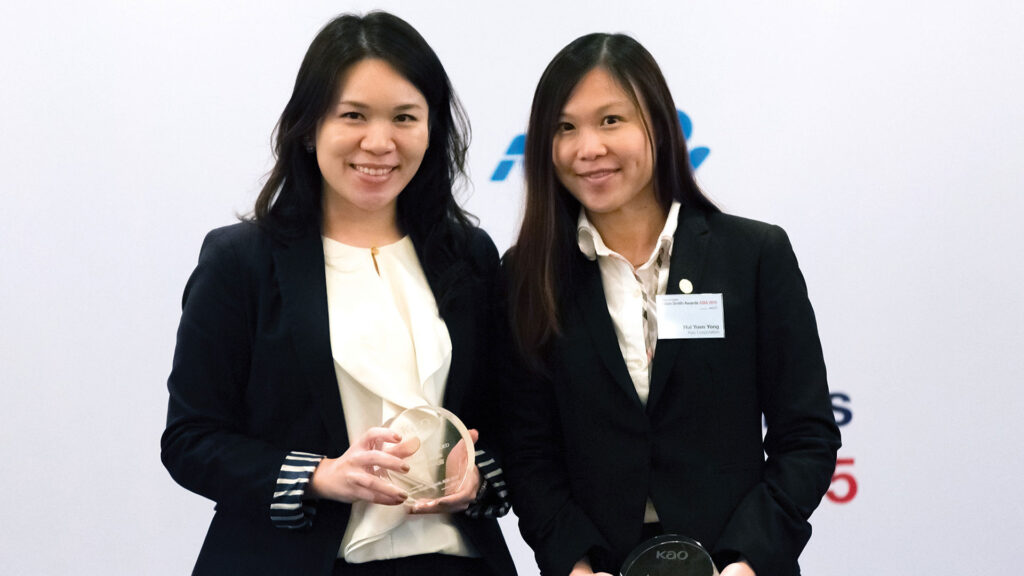
The challenge:
Kao has plans to increase its overseas sales from 30% in 2014 to 50% by 2020. To scale up its production capacity, the company established a second manufacturing factory in Indonesia in June 2014, and built a new chemical plant in Shanghai in May this year. With the increased capital expenditure of these investments, Kao’s negative cash flow is forecast at about JPY 60bn to JPY 80bn for 2015, significantly surpassing the average of previous years.
Therefore, improving operating cash flow became a key imperative for Kao. Treasury started to focus on improving their cash conversion cycle (CCC) with the goal to shorten Kao’s 60-day CCC to compete with top-tier market players globally.
The solution:
The decision was made to implement a global supply chain finance (SCF) programme to drive working capital efficiency. In partnership with Citi, the multi-year project was first implemented in Thailand in 2015. Another eight countries in Asia – China, Hong Kong, Japan, Indonesia, Malaysia, the Philippines, Taiwan and Vietnam – are expected to join the next phase of the ambitious scheme, and to be followed by EMEA and North America.
Through rolling out the programme in Asia alone, Kao’s CCC is expected to reduce by around 20 days, from about 60 days at present, over the course of three to four years. This translates into approximately JPY 40bn of working capital gains which the conglomerate can redeploy. What’s more, as Katsuhiro Inoue, Director, Accounting and Finance, Asia and Treasury, Global, explains “Further improvements and benefits will be realised as more suppliers are on-boarded and the programme is implemented in more countries.”
This SCF programme is designed to augment Kao’s relationship with its suppliers, balancing the need to advance its treasury objectives and support suppliers’ cash flow. Although extending the payables period can benefit Kao, its suppliers would be out of funds for a longer time. To alleviate the negative impact on cash flow, Kao’s suppliers joining the programme are entitled to sell Kao’s accounts receivables earlier than the payment deadline to Citi. Based on Kao’s credit, the bank offers suppliers better credit terms in the emerging markets where interest rates tend to be higher.
Overall, treasury centralisation is a priority for Kao’s treasury, and they have implemented an integrated solution combining netting, global payments and USD global pooling since 2012. The SCF programme is the latest addition to the centralised treasury management structure, which leverages the company’s existing host-to-host platform for global payments, and the payment files are routed to CitiConnect for trade.
Best practice and innovation:
With around 90 subsidiaries worldwide, plans to grow overseas sales by 20% within a five year timeframe, and incremental capital expenditure in order to scale up production capacity, the SCF solution is a crucial building block to create synergy for Kao’s global treasury management and support strategic business growth. This best-in-class SCF solution places Kao in pole position for CCC efficiency amongst Japanese MNCs, and increases the company’s competitiveness with its global peers. “By achieving international treasury best practice and strengthening working capital efficiency, Kao has set a benchmark for Japanese MNCs and is well-positioned to compete with other leading market players globally,” says Inoue.