

Home

Harnessing the Power of Technology Highly Commended: Hong Kong Aviation Capital

Published: Jan 2016
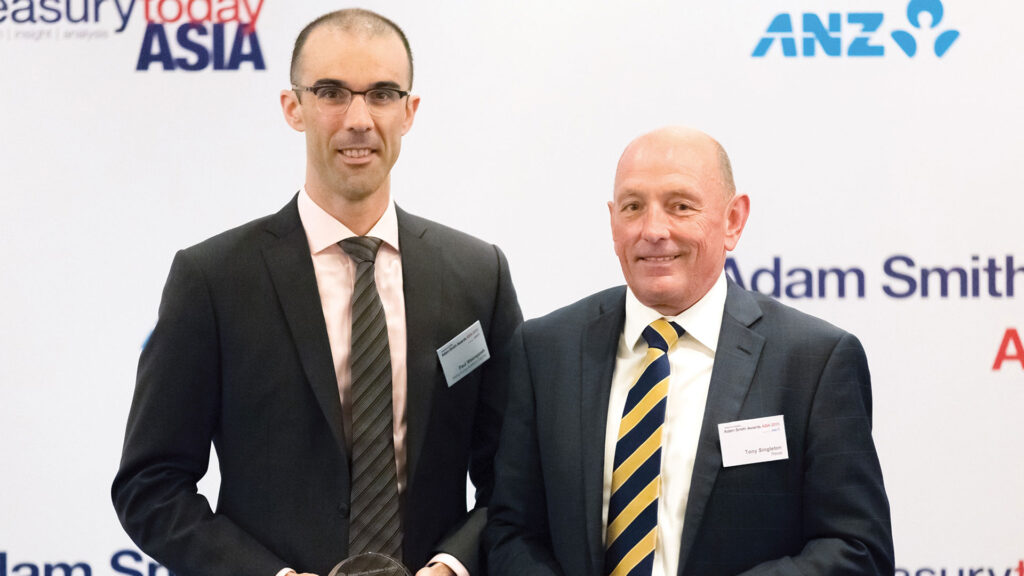
Photo of Paul Weerappah, Hong Kong Aviation Capital, Tony Singleton, Reval.

Photo of Paul Weerappah, Hong Kong Aviation Capital, Tony Singleton, Reval.

Paul Weerappah

Treasurer
Hong Kong Aviation Capital logo

Hong Kong Aviation Capital (HKAC) is a global aircraft lessor with a diversified portfolio of modern commercial jet aircraft. It brings in annual revenues of about $300m and has assets in excess of $3bn.

in partnership with

Reval logo

Flight firm rises to the challenge

Treasury needed a robust, scalable and globally accessible system capable of handling inherent complexity. Its first priority was to deliver timely and accurate reporting for its debt instruments, in compliance with the Chinese Basic Standard for Enterprise Internal Control (C-Sox). ‘Four-eyes’ controls, segregation of duties and audit trails over this critical data were essential. The company chose Reval to deliver the solution.

The challenge:

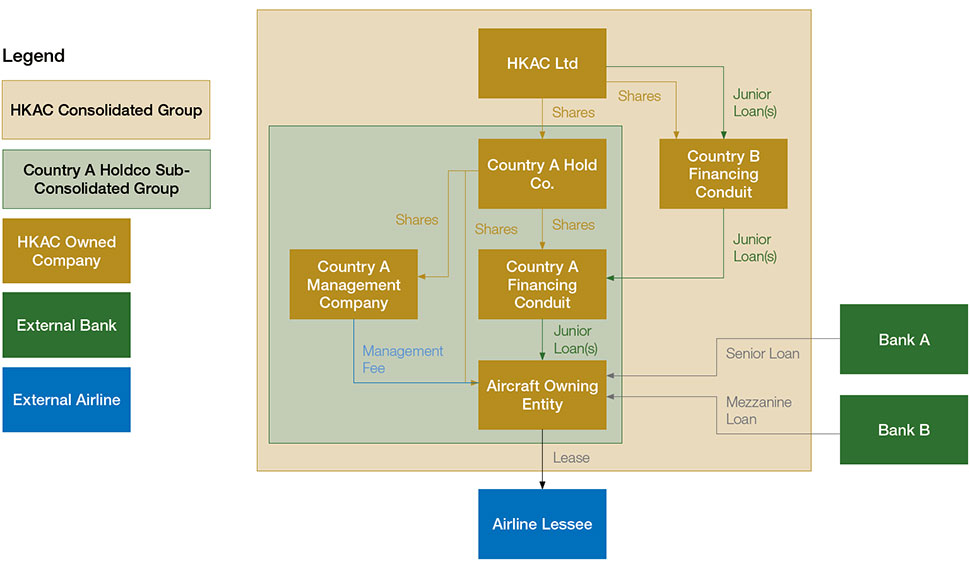
HKAC has a centralised treasury of three, but has many internal stakeholders in multiple geographic locations who require access to treasury data. As an aircraft leasing business, it has complex transactions involving multiple companies, jurisdictions and instruments. The accounting for these arrangements is also complex with on and off balance sheet structures, only some of which form part of the overall consolidation, but all of which must be reported on. There has always been a need to robustly and accurately record, monitor and account for all instruments and companies involved in treasury transactions on a fully consolidated, sub-consolidated and de-consolidated basis. The scale of this task is illustrated by the sample single transaction structure diagram below; there over 70 of these arrangements with the possibility of multiple additions every month.

Diagram 1: Sample single transaction structure

As growth and scale accelerated, it was no longer feasible to rely on spreadsheets to support tracking, accounting and payment obligations for these multi-million dollar transactions. HKAC required a robust controls environment to replace spreadsheets for loan assets and liabilities, derivatives and management fees.

The solution:

Treasury needed a robust, scalable and globally accessible system capable of handling inherent complexity. Its first priority was to deliver timely and accurate reporting for its debt instruments, in compliance with the Chinese Basic Standard for Enterprise Internal Control (C‐Sox). ‘Four-eyes’ controls, segregation of duties and audit trails over this critical data were essential. Thereafter, it needed to remove the inefficiencies and risk from its manual processes and improve cash visibility, hedge accounting and debt management.

The selection of the cloud-based platform from Reval proved to be a prudent one in many ways. As Paul Weerappah explains: “Many of our financial instruments are bespoke so we needed to be confident all the varieties within our portfolio could be accommodated, but we also needed to consider how easy it would be to live with the vendor solution if the regional focus of our business were to shift. The system also need to produce monthly accounting journals (more than 20,000 per month) for reporting to our parent six days after month end due to strict Chinese parent reporting deadlines (best practice tends to be eight plus business days), so accuracy and reliability are also important.” Aside from system capabilities, it was important to HKAC that the chosen supplier had skilled personnel and a culture of partnership with its customers in order to be confident the deployment would be a success.

Best practice and innovation:

Although a ‘standard’ project for the most part, the final stages of the HKAC implementation threw up a potential disaster. The project coincided with the final stages of an office move which saw the treasury function relocate from Sydney to Hong Kong. From an operational point of view, Reval’s geographically neutral cloud technology saved the day. It was possible for some of the final, more labour-intensive aspects of the implementation to seamlessly continue with the vendor in Australia, whilst people were physically moving to Hong Kong.

A cloud system was instrumental in achieving this as a large portion of HKAC’s business activity is stored in the system (almost 4,000 trades) which produces around 20,000 to 30,000 individual monthly journals that feed into the accounting system. The team from HKAC needed its new platform to be sufficiently robust and scalable to handle the growth of a particularly complex business because once the move had taken place, it would be the single source of treasury truth upon which many would rely. Globally distributed personnel do not have to wait until the Hong Kong-based treasury team comes online to gain access to vital data.

The new system is instrumental as HKAC grows. More than 15 aircraft will be added to the portfolio this year, with each additional typically requiring the creation of one or two new companies. Every aircraft deal tends to involve five to six group companies, and potentially two or more external financing parties: complexity is the order of the day. Having the new system in place allows HKAC to expand rapidly and safely, without adding headcount.

Key benefits:

  • A smooth geographically neutral technology implementation in disruptive times.

  • A robust control environment for loan assets and liabilities, derivatives, and management fees.

  • A single source of truth for an increasing number of stakeholders in a growing global organisation.

  • A robust and scalable system capable of handling increasing volumes and complexity of transactions.

Key learning points:

  • Consider how unforeseen business change might impact the implementation and usefulness of your system eg re-organisation, M&A.

  • Set out the objectives for a TMS clearly and evaluate offers from a range of suppliers on a consistent basis ie a robust RfP process.

  • Be uncompromising with your requirements, but also be open to different approaches to things like business processes and reporting; vendors may have some better ideas.

  • Ensure the implementation is properly resourced, and give serious consideration to having the vendor do the heavy lifting so that interference with ‘business as usual’ activities is minimised. For this, a fixed price rather than time-and-materials (T&M) cost might be worthwhile considering.

  • Be religious in adhering to deadlines.

  • Ensure reporting from the system is of a standard that will impress and be of use to the rest of the business to win their buy-in as early as possible.

The Adam Smith Awards Asia is the industry benchmark for best practice and innovation in corporate treasury. To find out more please visit treasurytoday.com/adam-smith-awards-asia

All our content is free, just register below

Already have an account? Sign In

Already a member? Sign In