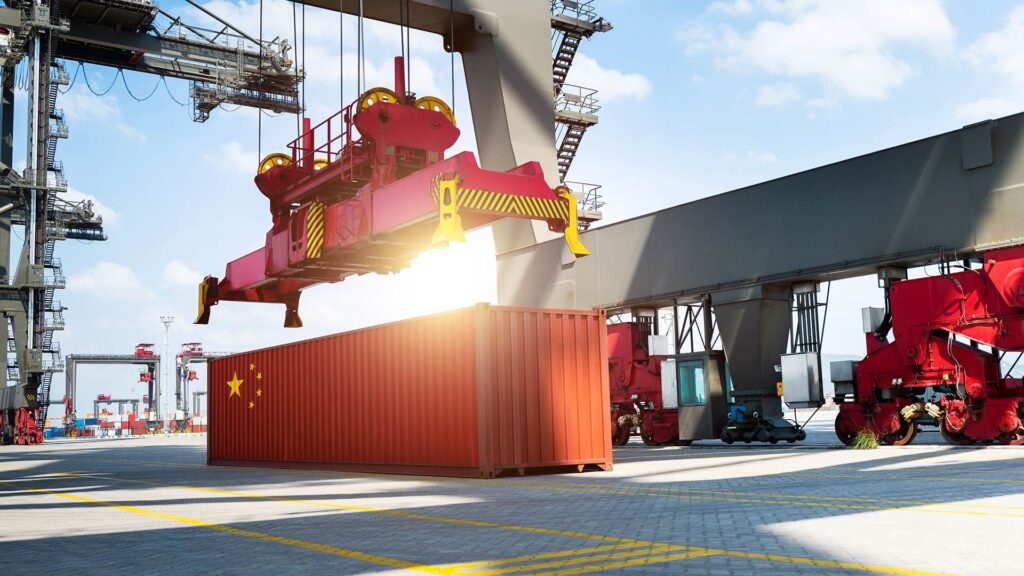
A recent Barclays research note stated China’s December exports exceeded expectations, rising at the fastest pace in three months as shipments to non-US markets helped offset the widening contraction in exports to the US.
In particular, exports to the EU and UK maintained double digit growth, shipments to ASEAN strengthened and exports to Africa again posted the largest gains among major regions, rising more than 20%. In contrast, direct exports to the US were down 30% year-on-year.
The bank observed Chinese exporters are actively looking for alternative buyers, diversifying and broadening their overseas markets. The share of exports to non-US markets increased to 90% last year from 85% in 2024.
Trina Solar Group – one of the largest solar panel manufacturers in the world – is an example of a Chinese exporter that has adjusted its overseas market strategy over the last 12 months.
Roger Wei, Group VP and Treasury Head, explains that by deepening partnerships in emerging markets across Southeast Asia, the Middle East and Latin America, the company has successfully diversified beyond established markets.
“Leveraging competitive pricing, continuous technological innovation and tailored financing solutions (often supported by banks like HSBC) has been crucial,” he says. “Additionally, aligning with global green energy initiatives has opened new doors. While challenges like currency fluctuations and logistics persist, the growing worldwide demand for clean energy makes us cautiously optimistic about sustaining this momentum.”
Wei expects exports to remain a key growth driver for China over the coming months.
“While navigating trade policies requires agility, our diversified global manufacturing footprint, supported by strategic financial partnerships, helps mitigate regional risks,” he says. “The key is balancing scale with sophistication, leveraging solutions like structured trade finance and currency hedging to secure our growth trajectory in this dynamic environment.”
Chinese exports are proving they are competitive beyond just pricing, with a robust performance in 2025 amid tariff uncertainty. This export resilience is supported by the country’s trade diversification and the pull effects from other economies’ front-loading purchases, which have generated demand for Chinese intermediate and capital goods.
That is the view of Aditya Gahlaut, Head of Global Trade Solutions, Asia at HSBC, who adds that this is not just a trans-shipment story.
“ASEAN’s front-loaded exports to the US generated demand for intermediate goods and capital goods from China, while the EU’s increased imports from China didn’t coincide with exports where there was front-loading,” he says.
Gahlaut observes that despite resilient exports, Chinese enterprises are increasingly pursuing overseas direct investment to optimise global supply chains and manage trade uncertainties.
“We have seen healthy growth but we feel this trend has a long way to go,” he says. “While overseas direct investment may partially substitute goods exports, it is likely to boost service exports.”
Barclays expects export resilience to continue with exports remaining an important growth driver and partially offsetting weaker domestic demand, particularly in private consumption and property.
Several structural factors support China’s export performance, including the global AI/technology upcycle (China is a major supplier of AI‑related manufactured components, accounting for over 30% of global export value in critical AI products) and green technology competitiveness.
Stronger exports of electric vehicles, batteries and energy storage equipment reflect China’s structural advantages in green technology and high value‑added manufacturing.