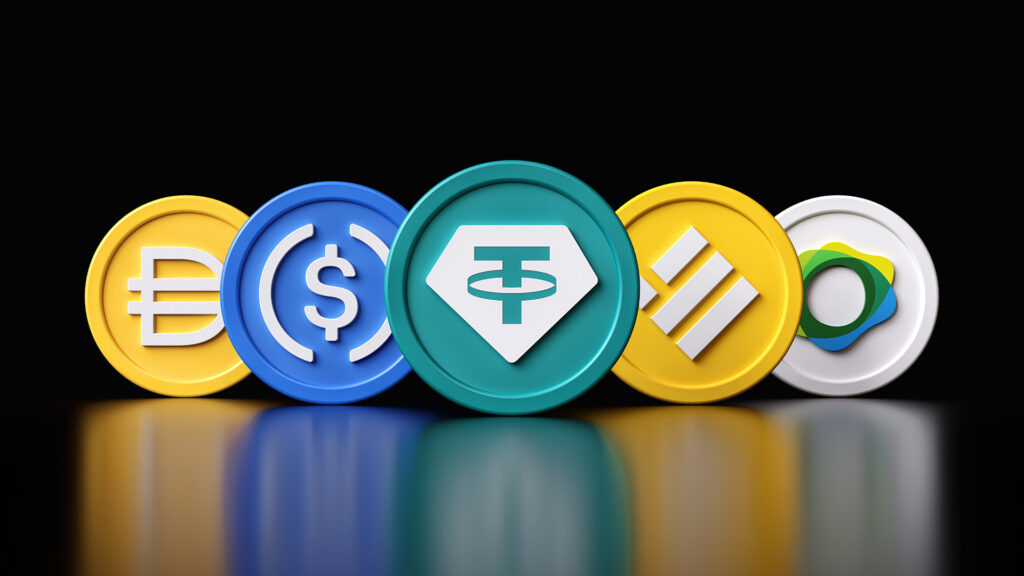
On the payment application it is the pegging mechanism that gives corporate and consumer end users much greater certainty that a dollar is worth a dollar. This reduces the volatility and ups its suitability for payment applications.
Stablecoins can be used as:
“Stablecoins are the on-chain ‘cash leg’ payment mechanism that the rest of the tokenised ecosystem was waiting for,” says Masquelier, envisaging on/off access to tokenised MMFs, digital bonds and marketplaces, M2M programmable payments and so on.
“That said, let us keep perspective: measured against global ISO 20022-enabled payment flows, corporate usage remains a rounding error. For corporates, the strategic point is this: stablecoins are the entry ticket to that broader ecosystem,” says Masquelier. “A treasurer who masters stablecoin operations – custody, controls, accounting, compliance – has built the muscle to operate in the whole tokenised marketplace of the next decade. I see a layered ecosystem emerging rather than a winner-takes-all contest:
-
Regulated stablecoins for open-loop, cross-border and marketplace flows.
-
Tokenised bank deposits for intra-bank corporate settlement with balance-sheet protection.
-
And, eventually, Wholesale CBDC or solutions like Fnality for interbank settlement.”
Siemens’ Heiko Nix isn’t so bullish, cautioning that even though the technology is established and proven, the surrounding standards aren’t there yet. “From where we sit, stablecoins are primarily a technical innovation, not a monetary one,” he says.
“Economically, both bank deposits and stablecoins represent claims against an issuer denominated in a reference currency,” he continues. “The fundamental innovation of stablecoins is therefore less the unit of account than the ‘rail’ on which it moves” – in other words, DLT.
“What’s new is the rail and what it offers,” continues Nix, as he agrees the key pros of coins are: 24/7 availability; no cut-off times; programmability and settlement in seconds. “Those are the problems worth solving,” he adds, while stressing the potential for cross-border reach on a common universal infrastructure is another pro. Whether the money on that ‘rail’ is called a stablecoin, tokenised deposit or a CBDC is the least interesting variable. The payment instrument itself doesn’t matter. Instead, the infrastructure and integration layer does. “The interesting layer is above the instrument: programmable business processes,” adds Nix, although he does point out programmable money alone isn’t enough: invoicing; delivery evidence; tax handling and reconciliation have to digitise in parallel; and enterprise resource planning (ERP) systems must align.
Cons
None of the ‘rail’ pros of stablecoins are unique, in Nix’s opinion. “Instant payment schemes already deliver 24/7 settlement in seconds, and standing instructions have offered basic programmability for decades,” he explains. “What stablecoins add is the packaging – these capabilities combined on one rail, across borders and currencies.”
There are some disadvantages with stablecoins, believes Nix, listing:
-
The risk structure – a stablecoin is a claim on a claim: the holder is exposed not only to stablecoin issuers, but indirectly also to the quality, custody and liquidity of the reserve assets maintaining the peg. The USDC episode in March 2023, when Silicon Valley Bank held part of Circle’s reserves as it collapsed imperilling the peg, showed this.
-
Fragmented reach: across multiple issuers and blockchains doesn’t aid commonality, or interoperability.
-
Limited ERP and TMS integration: is problematic. Stablecoin payments aren’t yet embedded in corporate systems and processes to the same extent as conventional bank payments.
Overcoming the treasury integration issue
A potential solution exists with SAP’s Digital Currency Hub. This embedded solution connects core ERP systems to blockchain-based payment rails, thereby allowing businesses to trigger 24/7, instant, low-fee cross-border B2B payments using stablecoins like PYUSD, USDC and EURAU. The latter is a MiCAR-compliant euro stablecoin issued by AllUnity that runs on Ethereum, Solana and Arbitrum.
In a similar vein, Kyriba has partnered with Merge, a regulated stablecoin payment and routing platform to try to give its treasury management system (TMS) clients embedded stablecoin access and DLT functionality.
Kyriba has done a separate deal with Fipto, Europe’s nascent regulated stablecoin infrastructure provider, to facilitate the on-boarding of Ledger, a digital wallet and asset security firm, and of Mantu consultancy. The deal allows them both to deploy live stablecoin payment flows in Kyriba’s TMS. Ergo a regulated stablecoin payment rail is now live, fully reconciled and embedded directly within their enterprise treasury workflows. This is a real-world usage example on automated supplier payments and cross-border intercompany flows.
Tokenisation is better?
“The most evident use of DLT in financial services is, in our experience, not public stablecoins but tokenised bank money,” says Nix, pointing out that Siemens has been running 1,000+ payments per month in production on J.P. Morgan’s Kinexys platform since 2021, with self-funding accounts and balance-triggered sweeping: near real-time, programmable, inside our existing bank relationship.
Stablecoin use cases exist where banking infrastructure is weak: high-inflation economies and certain remittance corridors in which FX and other risks are high. “For a corporate operating mainly in well-banked markets, those are corridor-specific problems, not a strategy,” he says.
Nix’s preference for tokenised deposits is clear. As he says: “We use tokenised bank money: Kinexys (since 2021); Partior atomic settlement via Standard Chartered (2024); Citi Token Service (2025); EUR and USD blockchain-based accounts in Singapore, Frankfurt and New York.”
Use cases
The fact stablecoins attack three chronic frictions that traditional rails haven’t fully resolved around time, cost and 24/7 availability, causes EACT’s Masquelier to have a more optimistic view. He maintains instant settlement with no cut-off times, no ‘banking hours’ or chain of correspondent banks each taking a margin and a day, are driving adoption.
“For treasurers, these pros translate into use cases,” says Masquelier, listing:
-
Cross-border B2B payments on inefficient corridors.
-
Repatriation of trapped cash from exchange- controlled jurisdictions.
-
Instant intercompany rebalancing outside banking hours.
-
Marketplace and gig-economy payouts.
-
Programmable payments via smart contracts.
“The examples are no longer anecdotal,” says Masquelier. He cites PayPal USD’s EY and Google invoices and Xoom remittance activity, as well as Mastercard’s move on BVNK – one that connects on-chain payments and fiat rails via the US$1.8bn acquisition. “This confirms payment incumbents see the same signal,” he says. “I would argue stablecoins are the most evident production-scale application of DLT in FS. They have achieved what tokenised securities and CBDCs haven’t yet – real, daily, commercial usage.”
Conclusions
“Stablecoin ecosystems have plenty of issuers, but few corporate counterparties – a classic chicken and egg situation,” argues Siemens’ Nix. Ultimately, adoption is not driven by the instrument. What matters are features built on top: 24/7 availability, instant settlement, programmability and seamless integration into corporate processes.” That ecosystem standardisation and integration isn’t fully there yet, even though the tech is.
These features can come from different avenues and routing options, with stablecoins undoubtedly joining the mix. But corporates treasuries are the clients and cannot be expected to delve into every scenario. Those that deliver the most comprehensive service – a mix of stablecoins, tokenised deposits, CBDCs, established digital money on TradFi instant rails with data-rich, programmability and other services – win.