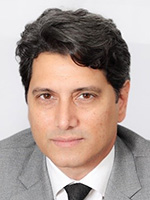
As Thomas Kikis, Managing Director and Head of Markets, US and Americas, explains, AI is already being deployed on the trading floor to enhance decision-making – but humans remain firmly in control. AI is enabling corporate treasurers to better understand how money is expected to move through their business. From the impact of weather patterns on consumer behaviour to the effect of currency volatility in specific markets, forecasting has become more dynamic and data-driven.
At the same time, as forecasting becomes more scientific, the role of the treasurer is becoming more strategic, shifting from data compilation to interpretation, validation and strategic decision-making. AI enhances the science, but human judgement remains essential.
“Cash flow forecasting has always been an art as much as a science,” says Kikis, who has overseen the integration of AI on the trading floor to help the bank’s corporate clients across 54 markets in Asia, Africa and the Middle East better hedge cash flows to support liquidity and manage risk across FX, credit and commodities. He adds, “While AI will significantly enhance the science through more robust data, analytics and real-time insights, it will not replace the art – that is the experience and judgement of treasurers.”
Kikis further explains that effective cash flow management still starts with fundamentals, such as understanding opening cash balances. This is less about AI and more about accounting and systems. From there, AI adds value by projecting future cash positions across sales, loans, investments, payroll, inventory, taxes and other operational drivers.
At Standard Chartered, AI-enabled tools are improving data quality, integration and real-time visibility across corporate cash flows. This strengthens the analytical foundation of forecasts, particularly in identifying patterns, trends and cross-market dynamics.
Kikis notes that, “AI can help treasurers better identify trends, integrate economic and market data, and analyse complex variables across geographies and products. This will improve accuracy, speed and confidence in forecasts.”
Getting hedging right
The bank has also developed AI tools that leverage corporate data to model optimal hedging strategies – recommending the most appropriate products or tenor, and instruments aligned to specific exposure levels.
“Once corporates have a clear idea of their closing cash balance, they can work out the need to hedge and protect,” he says.
By providing a clearer line of sight into exposures, AI helps ensure companies are neither over nor under hedged. This reduces unnecessary trading activity and avoids the incremental costs that could erode returns.
In some cases, the insight may even be not to hedge at all, where correlations across markets make the cost of hedging less efficient. “This is really helpful because the cost of hedging in emerging markets is high. One way to make certain you impact the bottom line is to hedge appropriately, not over or under hedge. Every trade is effectively an added cost, so getting it right the first-time matters,” Kikis says, adding that other benefits include better understanding if weekly, monthly or quarterly hedges are best.
Beyond execution, these tools also help treasurers refine strategy over time, offering greater clarity on whether weekly, monthly or quarterly hedging approaches are most effective.
Why humans must stay in control
Despite these advances, human oversight remains critical.
Kikis cautions against overloading AI models with too many inputs. When the technology tries to forecast everything with too many inputs, it can quickly become like “boiling the ocean.” He says, “AI can potentially create some new headaches: I recently spoke to a treasurer who told me they were up to 30 inputs for cash flow hedging forecasts, yet one mistake in an input, could lead to odd outputs.”
Data quality also remains a challenge, particularly in emerging markets where reliable information can be harder to access and verify. This makes human judgement and validation even more important.
Most importantly, accountability cannot be outsourced. Treasury decisions, especially those tied to risk, governance and financial outcomes, must ultimately sit with humans.
“In the sales team, when we see trades come through our platform, we always sense check, focusing on dates, size and governance. Those things are real: humans won’t go away anytime soon. You can’t trust all data that comes out of the forecasts.”
Kikis concludes that human oversight is also essential to maintain policy lines around cash flow prediction, and ultimately a hedge.
AI is a powerful tool, but it isn’t sentient. The responsibility for decisions – inputs, outputs and outcomes, will always rest with people.