Anheuser-Busch is a leading global brewing company, most notably producing Budweiser and Bud Light. The company established its presence in China in 1995 with the acquisition of a first brewery and acquired Harbin Brewery Group in 2004, which added a further 13 breweries. Anheuser-Busch has 18 companies in China including a regional head office, and owns a 27% stake of Tsingtao Brewery Company. Two treasury staff are based in Shanghai, working closely with the international treasury based in St. Louis, Missouri.
The vast geographical scale of China means that it is often necessary for corporates to bank with a large number of banking partners. Anheuser-Busch uses more than 20 banks in China but is keen to pare this down to its key banks: one foreign and one domestic bank. While the market has recently been opened to foreign banks, the huge branch networks of the local banks make it necessary to use domestic banks in order to ensure adequate coverage, particularly for companies like Anheuser-Busch which rely on local banks to collect sales revenue in cash.
“Now, as we are expanding our business in China, we have created a dedicated Asia treasury department which is focused on working with the banks and finding treasury solutions to lower our cost of capital and provide better funding.”
The company has only recently moved towards a centralised approach to treasury, as treasury operations were previously conducted on a local basis. “Three years ago, before we bought the Harbin Brewery Group, we had no Asia treasury department,” explains Stanley Wang, Senior Financial Analyst. “All the treasury work was managed by the accounting staff locally, with some assistance from the US international treasury department. Now, as we are expanding our business in China, we have created a dedicated Asia treasury department which is focused on working with the banks and finding treasury solutions to lower our cost of capital and provide better funding.”
Before the acquisition in 2004, the Harbin Brewery Group’s treasury operations were very basic, with no access to e-banking solutions. Balance information was limited to the monthly statement issued by the bank, or had to be obtained by visiting the branch. The expansion has made visibility over Harbin breweries’ cash increasingly important, particularly as the company is now looking to expand Harbin brand across China. It became clear that a more centralised approach was required, and that a sophisticated banking solution should be adopted in order to provide better visibility over its cash.
Anheuser-Busch was also keen to consolidate its numerous banking relationships, with the goal of eventually using one local and one foreign bank. The relationship between the two chosen banks was of key importance. “We needed good co-operation between our local bank and our foreign bank, so that we could better use the expertise from both banks to achieve good cash control,” says Janet Ming, Asia Treasury Director.
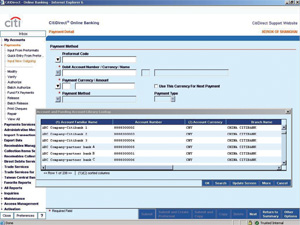
Anheuser-Busch had been working with Citi for four years, having been a pilot customer for Citi’s liquidity management system. The services provided by Citi included an RMB cash pool incorporating one brewery and four branches, as well as payables and receivables services. “We found CitiDirect®, Citi’s e-banking system, to be reliable, cost-effective and efficient,” says Ming. The decision was therefore taken to implement Citi’s Multi-Banking Treasury Solution in order to streamline the company’s banking relationships by taking advantage of the strong relationship Citi has with ICBC, Anheuser-Busch’s key domestic bank.
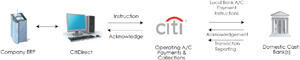
The major benefit of this solution was the reduction of the number of banking relationships that Anheuser-Busch needed to maintain. “We don’t have to use so many local banks to provide the local cash pick up or local banking services,” explains Ming. Citi’s Multi-Banking Treasury Solution incorporates a host-to-host connection with ICBC, which enables Anheuser-Busch to access balance information relating to the accounts held with the domestic bank via Citi’s e-banking system. The solution has also made it possible to automate the cash concentration structure which was set up to move the cash generated from the Budweiser business to the Harbin business.
Anheuser-Busch is planning to continue centralising its treasury operations in China as the two businesses are integrated and intends to set up a China shared service centre which will initially focus on accounts payable. The consolidation of banking activities will continue to be a priority as the company moves forwards. “The big obstacle in China is that you can’t find one bank that can fulfil all your needs, in terms of branch network, banking services and e-banking capabilities,” says Ming. “However, Citi’s Multi-Banking Treasury Solution has enabled us to minimise our banking relationships and improve our cash visibility and control.”