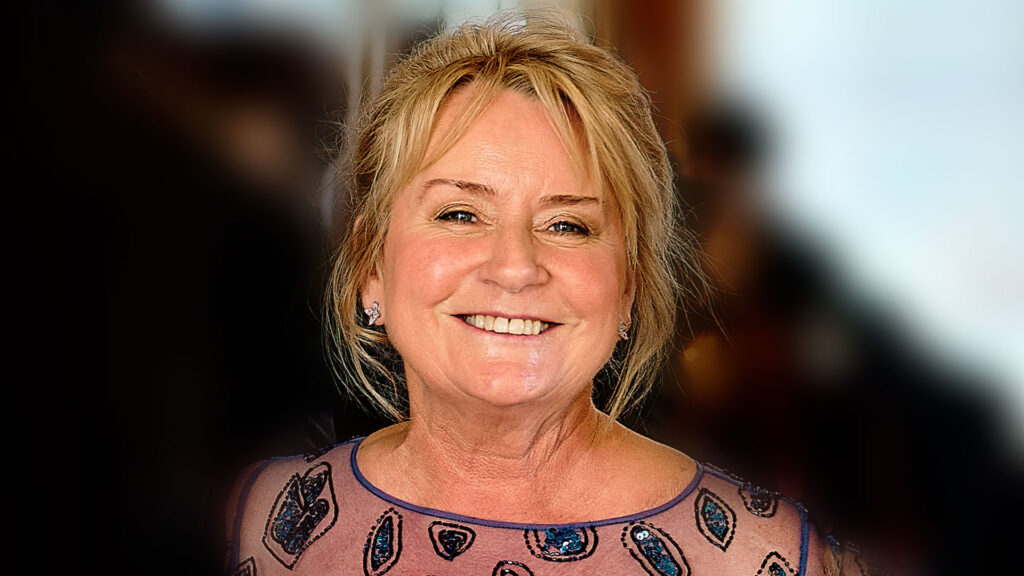
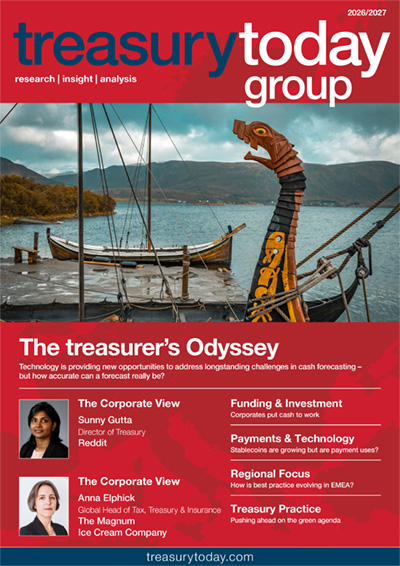
What motivated you to launch Treasury Today Group in 1998?
Strangely Pineapple Dance Studios! By which I mean that one of my inspirations when I was working on specialist trade press titles and the Financial Times (FT) as a journalist back in the 1980s was a lady called Debbie Moore, who was the founder of Pineapple Dance Studios in London in 1979.
Moore was the first woman entrepreneur to float a company on the London Stock Exchange in 1982. She was an early recipient of the Veuve Clicquot Business Woman of the Year Award in 1984 and awarded an OBE in 2010.
Not only that, but ex-model Moore worked her way up the business world from the bottom up. As her book ‘When a Woman Means Business’ details, she was the Mancunian daughter of a plumber and a clerk that had a tough working‑class background that in some ways mirrored my own. She left school at 15 without any O levels. But through determination made a success of her life and her business.
What else do you admire about Pineapple founder Debbie Moore? Who else inspired you?
I admire Moore’s innovation. She pioneered modern activewear by partnering to develop the first cotton and Lycra materials, which have since entered mainstream fashion.
Anita Roddick from The Body Shop was another early inspiration and spur to ensure that my business included women and people of all classes, races, gender and backgrounds in its day-to-day operations and in its reporting.
What gave you the confidence to think you could launch a business?
I started Treasury Today Group after running the corporate treasury reporting team at the Institute of Chartered Accountants in my early career, giving me access to a peer group. I then went on to work at the FT, so I had great insight into the profession. I could see there was a gap in the market for a best practice specialist corporate treasury title that really addressed treasurers’ specific concerns, so I went for it.
The desktop publishing (DTP) revolution had also happened in the 1980s where new technology that didn’t rely on expensive impact printing had unleashed a wave of new business, fanzine and magazine titles in publishing that transformed the industry. In the 90s you had the online revolution doing the same thing, opening up new opportunities. Technology had transformed the cost-based barriers to entry and made it possible for those with determination and a strong idea to follow their dream.
In the same way, technology is transforming the treasury function now with smaller teams and more centralisation – and in the future, more AI and blockchain-based automation is imminent. But that means there’ll be more opportunities as well. Being nimble enough to pivot towards focusing on risk mitigation and optimisation is crucial for modern-day treasurers. Just like I’ve had to pivot with my business to reflect the digital revolution.
What was your dream in the early days?
My dream was to launch a title specially for the corporate treasury industry that I was so familiar with and to serve their needs via in-depth magazine articles, topical online news and interviews that reflected their real concerns. Treasury Today Group developed rapidly from a magazine and online trade press title in the UK – it now now has a vast global digital and physical footprint, annual Awards, podcasts, and professional community groups in Europe, Asia and the Americas, such as our Women in Treasury & Finance gatherings.
We focus on the personal, in terms of career development, work-life balance and diversity of background, colour and gender, as well as the professional in terms of the latest cash management techniques, supporting technologies, regulation, research and so on. We’re also launching male events to reflect their changing realities as well.
What is the USP of Treasury Today Group?
The whole premise of the Treasury Today Group is it’s for the corporates and it’s for everyone. I wanted to bring the intellectual rigour and quality of the FT to the treasury arena. We don’t sell ourselves to the highest bidder. Too many DTP and early online trade press titles did. They were more interested in jargon or getting advertorial money from the banks, than talking to the corporates.
I had the opposite approach, believing that if you build it – ie the authentic treasury audience and community without PR lightweight information – then they will come, in terms of subscribers and advertisers. This funds our mission to be the voice of the industry.
Subscribers to the magazine were a vital early support in getting Treasury Today Group off the ground. They valued us because those first treasurers we engaged with trusted what we were doing by reporting on the industry without fear or favour.
The whole premise of the Treasury Today Group is that it’s for the corporates and it’s for everyone.
Who mentored you in your early days?
Although I was inspired by a number of women to break into what felt like a very male-dominated space, one of my key early mentors was a man. John Precious, then Group Treasurer at the Wellcome Foundation, got what we were trying to do. I knew him from my time in charge of the Institute of Chartered Accountants treasury reporting team and he was amazingly supportive.
John had a lot of influence with his peers and got a lot of them to talk to me. He said things like ‘here’s a tax man to talk to’; ‘here’s a cash manager,’ ‘here’s a risk specialist’ and so on. This allowed me to really connect with the different subsets of the treasury function and a vast range of practitioners. I took the time to listen to their issues, needs and wants and to ask the questions that treasurers wanted answers to from regulators, technologists, banks, payment platforms and so on. They trusted me because I accurately reflected their views and informed treasurers about things they should be aware of, without any PR guff or marketing. The relationship with our treasurers is the base for everything we do.
We built a community in the UK and Europe step-by-step and have now replicated this in the Americas, APAC and EMEA.
How did you internationalise the title?
The US is a difficult market to crack. Culturally, they have a different mindset to the UK and European audience we initially established ourselves in, so we hired local writers to reflect this. We also applied our core principles of quality journalism that isn’t for sale to gain trust and treasurer relationships in the marketplace.
Our annual Adam Smith Awards were instrumental in getting us a US foothold, highlighting good regional and indeed global projects. Microsoft’s Anita Mehra and George Zinn were particularly helpful in the US in this regard.
It was the same process launching in Asia, the Middle East and so on. We gained the trust of local treasurers, often via their international colleagues, or local events and Awards, and then went from there. Alibaba were an enormous APAC supporter of ours because they appreciated the peer review process at our Awards.
I think that in Asia many of the local communities also appreciate we’re a family-run business with big ambitions. They often see themselves in us. Australia is different again culturally and we’ve had success getting to know and celebrate that market too.
What have been the biggest business changes during your career?
Globalisation and the rise of China, ASEAN and so on was the business story when we launched up until the great financial crash of 2008.
In China in the early days I went to Beijing University to get us good translators that could accurately share our information to the local market. We then approached regulators, local businesses and multinational reps in situ, trade bodies, banks and others to found a strong community. We printed in China, in Chinese, to reflect our deep commitment to the market. Our business evolved from that strong base.
Now of course, we’ve seen decoupling and globalisation retreat since those days. After 2008 banks de-risked, regulations got tighter, and low interest rates came in with Quantitative Easing. Now we’ve got high rates during a period of political, commodity and business instability caused by debt and the Covid-19 pandemic, plus a number of wars.
There is also the ongoing march of centralisation via technology transformations. The rise of the blockchain, smart contracts, stablecoins, AI and real-time data-driven treasuries are all live issues. We reflect it all. That is our job.
Anything you’d like to add?
Whether in publishing, corporate treasury or any other business, the foundations for success remain the same: be inspired, be true to yourself and your audience – and reflective of it.
I’d also like to thank all those who’ve supported us – whether that is our corporate audience, advisers, writers, staff or indeed technology providers and banks who have sponsored our research and analysis without interfering with our independence or rigour.
The corporates themselves are of course crucial to everything we do, so thank you to them for engaging with our reports, news, research, magazines, e-newsletters, insights, podcasts, interviews, events, awards and so on. It’s our treasurer community that makes us strong and optimistic for the future.