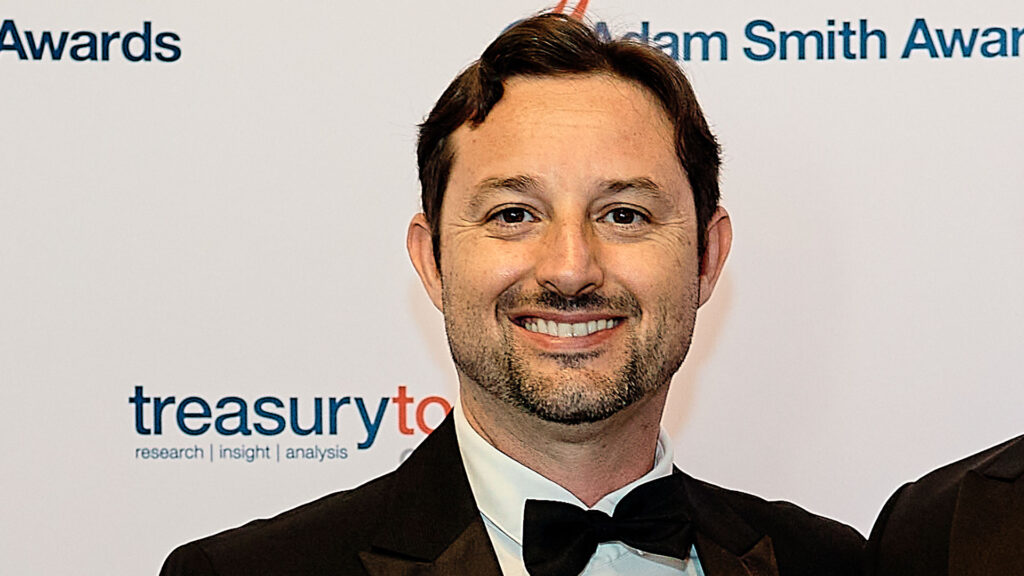
Many people reflect that they arrive in corporate treasury by accident, transitioning from other areas of finance rather than via a premeditated career path.
But Marcelo Penteado Baldo knew early on that he wanted to work in treasury. “It was a deliberate career choice,” he tells Treasury Today Group in conversation from the city Campinas, Brazil where he works as Treasury Coordinator at US paper multinational Sylvamo tasked, amongst other things, with overseeing cash and working capital management, risk management, insurance initiatives and managing banking relationships across the group’s Brazilian operations.
The essential skills for treasury success
Baldo’s journey into treasury began as a trainee at consultancy Deloitte back in 2004 where he was involved in audit, controls and risk management, picking up skills that he says continue to add value today. In the ensuing years – he worked in financial risk at Brazilian utility CPFL Energia and then moved into treasury with group 3M before he joined Sylvamo in 2021 – his experience in financial risk modelling extended to debt issuance and leverage analysis, as well as cost of capital assessments. He also worked across derivatives and financial markets, managing FX and interest rate risk. He says all these experiences gave him a strong foundation in governance, compliance and financial discipline, while also helping him understand how financial decisions are structured, controlled and reported across an organisation, that are now essential every day.
Indeed, pulling together all these strands of treasury and risk management in aproject early in his career crystalised his determination to work in treasury and get close to markets, strategic decision making and execution to make an impact. That particular treasury project, he recalls, sought to optimise the corporate capital structure, balance debt and equity, and combine scenario analysis and stress testing to evaluate leverage levels, debt sustainability and the cost of capital under different market conditions and still counts as one of his more formative experiences.
“It was a career high,” he enthuses. “The objective was not only to optimise funding costs, but also to ensure resilience, alignment with risk appetite and compliance with covenants and governance frameworks. The experience was particularly meaningful because it bridged strategic finance and treasury execution – translating analytical insights into practical funding and risk management decisions. I was proud of delivering a solution that was both technically robust and decision‑oriented, strengthening the company’s financial strategy while maintaining strong governance.”
A well-run treasury department has clear policies, strong governance and excellent visibility over cash, risk and funding. It operates proactively, anticipates challenges and uses data and scenario analysis to support decisions.
Alongside an armory of technical skills, Baldo has come to value communication skills just as importantly. The ability to translate complex financial topics into clear, decision-focused messages for senior management, committees and governance bodies is one of the most important lessons he’s learned over the years. “Treasury and risk management are as much about culture and communication as they are about technical expertise. Over time, I’ve learned the importance of being able to communicate a strong risk and treasury culture. This clarity builds trust and enables better, faster decisions,” he says.
The other essential treasury skill, he adds, is a problem-solving mindset and the ability to unpick the frequent challenges that pop up across liquidity, FX exposure, funding and working capital as well as ensuring alignment with corporate governance and policies. “Rather than focusing only on constraints, I believe the role of treasury is to also actively propose solutions,” he says, concluding that ultimately, a successful treasury performance depends on pulling together these three seams: technical expertise, communication, and the ability and determination to solve real business problems.
The varied role of treasury
Baldo revels in the varied nature of his role and says each day really does bring different and often unique challenges. Reflecting that “no two days are the same” he says daily tasks might be driven by markets, the business or oftentimes, regulation. The regulatory requirements of operating a complex business in Brazil is both demanding and an essential prerequisite to discipline and sound governance.
An early riser (we speak at 6am Brazilian time) he says some days are more intense, fast-paced and require decisions, in contrast to others which are structured and characterised by routine tasks like cash positioning and forecasting or analysis of FX exposures, funding and leverage levels and communicating and ensuring alignment with internal stakeholders.
“These dynamics make the role both challenging and highly engaging,” he says.
But like all treasurers, alongside the day-to-day, Baldo is also working on longer-term projects. In a strategy designed to drive working capital improvements, liquidity resilience and sharpen risk management, he is currently leading the implementation of a supply chain finance programme, using a multi-bank structure supported by a fintech platform. “The idea is that the solution increases flexibility, diversifies our funding sources, and improves supplier payment terms,” he explains.
In parallel, he is also working on the expansion of receivables sales programmes, enhancing liquidity generation and balance sheet efficiency without increasing leverage. “In a volatile interest rate environment, these initiatives have a direct and positive impact on cash flow and cost of capital,” he adds.
I was proud of delivering a solution that was both technically robust and decision‑oriented, strengthening the company’s financial strategy while maintaining strong governance.
These initiatives lead him to reflect on the growing sophistication of corporate treasury in Brazil as a definitive industry trend. Another trend is the evolution of the country’s regulatory environment, particularly regarding FX management. It has, he believes, elevated the strategic importance of treasury for corporates in the region.
In December, Brazil’s central bank maintained its benchmark rate at 15% and policy makers argued that a prolonged hold is needed to keep inflation on a steady path toward the target amid elevated uncertainty.
In the middle of last year, the government significantly increased tax rates applicable to credit transactions as well as many FX transactions in a regulatory change which also added complexity in execution, reporting and compliance. “This environment has required treasurers to design FX strategies that are not only effective from a market perspective, but also robust from a governance and regulatory standpoint,” he says.
As for FX operations, Brazilian corporates have historically faced an extensive regulatory framework requiring the submission of supporting documentation for every FX transaction, including invoices, import/export declarations and contracts. However, a regulatory shift introduced in 2022 enabled companies to manage their FX operations with greater flexibility and closer alignment with international market practices, reducing manual documentation processes and mitigating risks such as payment delays.
Navigating regulatory change in Brazil
It was at this point Baldo got involved in developing a new FX solution at the company that won an Adam Smith Award in 2025. In a career high, he reflects how the company’s treasury team adapted its FX strategy to a changing regulatory environment while delivering tangible value to the business.
Working closely with its banking partner, Bank of America, he led a project to streamline Sylvamo’s FX transaction process by designing a new risk-based tool that utilises statistical modeling to automatically determine which FX transactions require additional supporting documentation. Following its successful implementation, the bank made the tool available to other Brazilian corporates, and to date it has been adopted by more than 70 companies across Brazil.
“We really transformed how we approached FX processing, making it faster, more scalable, safer and easier to use. It became a leader in FX transactions in Brazil and a best in class model that other companies can emulate to gain the same level of efficiency,” he says.
“Working with our bank, we were able to recognise and take advantage of the opportunity afforded by Brazil’s decision to adjust regulatory requirements for FX transactions. After initial discussions, the solution was based on a risk-driven model for FX transactions, developed in accordance with Brazil’s bank regulation.”
As the conversation draws to a close Baldo articulates his prediction (and hope) that the role of treasury as a strategic partner within a business gains more traction in Brazil’s corporate culture in the coming years. “Treasury should be involved earlier in funding, investment, and growth decisions,” he argues.
In treasury, change is constant, whether driven by markets, regulation or technology. When supported by strong governance, solid analysis and clear communication, change becomes an opportunity to improve and create value.
What are his other treasury wishes? He would love to see more automation and standardisation to reduce manual processes and free up time for analysis and strategy. He also calls for stronger integration between treasury, FP&A and risk management, embedding cost-of-capital and risk considerations into business planning.
“A well-run treasury department has clear policies, strong governance and excellent visibility over cash, risk and funding. It operates proactively, anticipates challenges and uses data and scenario analysis to support decisions. It balances control with flexibility, protects the company during periods of stress and supports sustainable growth. Trust, transparency and consistency are key indicators of maturity.”
And although he acknowledges change is challenging, he urges his peers to embrace it, pointing to his own career path, from audit to controls, then risk, and finally treasury, as a reflection of his own mindset of continuous learning and adaptation.
“In treasury, change is constant, whether driven by markets, regulation or technology. When supported by strong governance, solid analysis and clear communication, change becomes an opportunity to improve and create value,” he concludes.