As South-East Asia races to meet surging electricity demand and accelerate the energy transition, one challenge looms larger than any other element of the challenge: financing.
According to the International Energy Agency (IEA), power demand across ASEAN is projected to grow by 3-4% annually through 2040, requiring hundreds of billions of dollars in grid investments. While the spotlight often falls on generation, the transmission infrastructure and grid connectivity needed to move energy efficiently and reliably is just as critical. And there is a hard reality behind every solar farm, offshore wind project, interconnector, battery system, and transmission line that without financing, infrastructure does not get built.
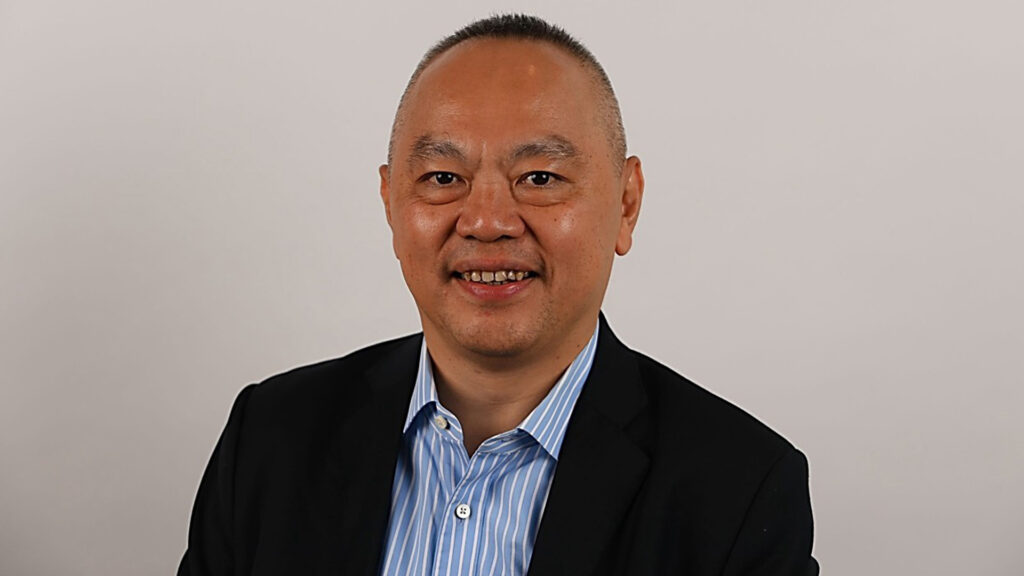
Enter Frank Tsai, Vice President and Senior Customer Finance Advisor for Southeast Asia, Australia and New Zealand at Hitachi Energy, the global power technology and energy systems company. Speaking to Treasury Today Group from his Singapore office, Tsai describes his role as at the intersection of infrastructure, finance, risk management and the energy transition, helping to structure and facilitate financing solutions for major energy and transmission projects.
“There’s a saying in our industry that there is no transition without transmission,” he says. “You can build all the renewable generation capacity you want, but without modern and expanded transmission networks, that energy cannot reach where it’s needed. Transmission is the key to the transition, and investment in power grids is a necessity as we embark on the journey toward a sustainable energy future. A modernised and expanded power grid is the linchpin of the energy transition, enabling the integration of renewable energy sources, enhancing reliability, reducing energy losses and fostering resilience. And no transmission project moves forward without finance.”
Making infrastructure bankable
Hitachi Energy is one of the world’s leading providers of transmission infrastructure and power technologies, supporting everything from renewable integration and grid modernisation to high voltage direct current (HVDC) systems. But for many customers, procuring this infrastructure is only half the challenge.
Large-scale transmission projects are highly capital intensive, often long-term in nature, hold multijurisdictional risks, foreign exchange exposure and complex regulatory considerations. For project sponsors and utilities, the challenge is not only to procure world-class technology, but also to secure financing that is competitive, sustainable and aligned with project risks.
It is where Tsai’s role becomes pivotal. Comparing his job to an “in-house banker,” he helps customers explore financing structures, engage lenders and investors, assess risk mitigants and develop solutions that can improve project bankability.
In practice, this means working with a wide network of financial ecosystems, including ECAs, development finance institutions (DFIs), multilateral institutions, infrastructure funds, private equity investors, commercial banks, insurers and other relevant funding partners. Moreover, supporting financing for transmission projects spans HVDC undersea infrastructure and new growth initiatives such as Energy Storage as-a-Service.
“My objective is straightforward: make strategically important projects financially viable,” he reiterates. “My role is to help clients unlock capital efficiently while mitigating financial risks and that means finding structures that are bankable, cost‑efficient and aligned with each customer’s balance sheet realities.”
Increasingly, this also means helping customers shift procurement models from traditional capital expenditure to more flexible operating expenditure frameworks in order to preserve balance sheet capacity, maintain healthy gearing ratios and free upfront capital to accelerate investments. Supply-chain disruption, geopolitical uncertainty, currency mismatch, inflation in key materials and longer project lead times can, he lists, all threaten project economics.
For example, in emerging markets, currency risk can be particularly difficult. Many infrastructure projects generate local-currency revenue but require foreign-currency financing or imported equipment. Where long-dated hedging instruments are limited, experience and judgment become essential. “This is where finance becomes more than just numbers,” Tsai says. “You need to understand market risk, credit risk, currency risk, legal constraints and stakeholder expectations. The structure must work not only on paper, but in execution.”
Tsai brings more than 25 years of experience across corporate and investment banking, structured finance, project finance, leverage finance, treasury and capital markets to his role at Hitachi Energy. Before joining the company, he held roles at institutions like Schroders, MUFG and Westpac, working across Indonesia, Hong Kong, Singapore and Australia. His early career began on the treasury and trading side, managing asset-liability positions, swap books, fixed income products and emerging-market debt.
Later, he moved into credit structuring, derivatives, structured finance and corporate coverage and he says his banking background gives him an advantage to working on the corporate side. “I understand how banks think,” he says. “I know what credit committees look for, how lenders assess risk, and what kind of structure can make a transaction more acceptable to financiers.”
His track record spans acquisition finance, structured finance and capital markets transactions that included securing leverage finance for one of Indonesia’s largest gold mines and structuring a shares-backed financing facility.
But after years in banking, Tsai wanted to get closer to the real economy. He saw an opportunity to move from advising, structuring and executing transactions from his desk in various banking roles, to helping companies solve financing challenges from within. Joining Hitachi Energy in June 2020 gave him that platform.
“In banking, you advise, structure and execute,” he says. “On the corporate side, you live with the outcome. You see how financing affects strategy, project delivery, customers and communities. That gives the work a deeper sense of purpose.”
Tsai reflects that recent geopolitical shocks have reminded governments and businesses that energy security cannot be taken for granted. Disruptions in fuel supply, shipping routes and commodity markets can quickly affect power prices, industrial competitiveness and national resilience.
Renewable energy, grid investment and storage can reduce dependency on imported fuels, but only if the infrastructure is in place. “Wind and sunshine do not need to pass through a shipping chokepoint,” he says.
AI can increase efficiency, but financial judgement, commercial intuition and experience remain indispensable.
“That is why grid investment is so important. It supports energy transition, but it also strengthens energy security.”
The rise of artificial intelligence and data centres adds another layer of urgency. Across Asia, digital infrastructure is expanding rapidly, but data centres require reliable and substantial electricity supply. Without sufficient grid capacity and energy infrastructure, countries risk missing out on future digital investment. Something he believes is a defining challenge for the whole region.
“AI, electrification, electric vehicles and industrial growth all require power,” he says. “If energy infrastructure does not keep pace, economic growth will be constrained.”
Indeed, it is this broad sense of purpose that increasingly fuels his work. “Helping accelerate grid investment means helping build stronger, more resilient economies.”
Despite the technical complexity of his work, Tsai says the hardest part of any project is often not the financial model. It is securing stakeholder alignment.
Large infrastructure projects involve multiple parties spanning lenders to governments, contractors and technical teams, each with their own priorities and concerns. Even the best financing idea will fail if people do not understand it or support it, he says. Success in infrastructure finance depends less on spreadsheets and more on people. “Business is ultimately about people,” he reflects. “You can have a brilliant structure, but without buy-in, it will not be implemented.”
He believes his multicultural background helps him connect with diverse teams. Born in Indonesia, of Chinese ancestry, an Australian citizen and Singapore permanent resident, Tsai has lived and worked across different countries and business cultures. Exposure to diverse business cultures has given him a nuanced understanding of communication styles, decision‑making processes and stakeholder dynamics.
“Listening with empathy often solves problems that technical expertise alone cannot,” he says. “People want to be listened to and respected. I try to understand where they are coming from. When people know you are listening, it becomes easier to work toward a common goal.”
He believes adaptability is one of the most important qualities in modern finance. Markets, regulations, risks and technologies constantly evolve and change, and the professionals who succeed are not necessarily the ones who know everything at the start, but those who can keep learning and adjusting to an evolving landscape. “In many situations, agility is more important than intelligence,” he says. “You need to adapt, absorb new information and keep moving.”
Like many finance practitioners, Tsai is also exploring how artificial intelligence can improve productivity and decision‑making in his role. He sees AI as a powerful tool for reducing repetitive work, accelerating research, comparing regulatory or tax regimes and summarising documents and supporting analysis.
Tasks that once required hours poured over a spreadsheet, can now be completed much faster with the right digital tools, and AI is helping eliminate repetitive tasks and freeing up time for higher-value strategic thinking.
But he is careful not to overstate what AI can do. Infrastructure finance remains highly dependent on human judgment – legal systems differ across markets and currency regimes may be restricted.
Capital controls, documentation issues, political risks and lender requirements often require practical experience that cannot be fully automated, and he believes the competitive advantage will come not from simply using AI, but from knowing how to ensure the quality and integrity of the raw data and interpret and challenge the outputs it produces.
“AI can increase efficiency,” he says. “But financial judgement, commercial intuition and experience remain indispensable.”
As the conversation draws to a close Tsai reflects on the ability to connect finance with tangible impact. Transmission lines, grid systems, energy storage and power infrastructure may not always attract the same public attention as the renewable generation assets the support. Yet without it, the energy transition cannot happen at scale.
“No project succeeds without finance,” he reiterates. “Finance is not just about funding. It is about enabling projects that support the energy transition, energy security and economic growth.”
It is this sense of purpose that continues to drive his work across the region and his determination to use his decades of experience in banking and finance to help turn APAC’s green energy ambitions into execution, one bankable project at a time.
“If we can structure the financing well, manage the risks and bring stakeholders together, we can help accelerate the infrastructure that the region needs.”