In today’s environment, geopolitical risks, uncertain markets and a more complex risk landscape are ramping up the challenges for corporate treasurers seeking appropriate investment tools.
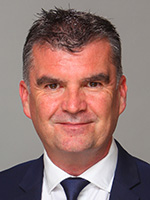
For treasurers, the challenges are significant. But according to Gary Skedge, Portfolio Manager, Liquidity at Federated Hermes, money market funds (MMFs) are designed for precisely this environment – and in the current market, they are coming into their own as investment tools, “rather than just operational parking vehicles.”
Shifting landscape
From the current conflict in the Middle East to election cycles, inflation worries and trade tensions, geopolitical risks and market volatility are continuing to shape the investment landscape. As Skedge observes, “Geopolitical risk has moved from being a background consideration to a central investment variable.”
He notes that ongoing conflicts, shifting trade alliances and persistent political fragmentation are all contributing to elevated volatility across asset classes. “And at the same time, interest rates have reset structurally higher than corporates were used to in the previous decade,” he adds.
Given this combination of higher yields and greater uncertainty, says Skedge, “liquidity decisions now carry much more strategic weight.” And while investors are being paid to stay short, “they are also more conscious of preserving capital and maintaining access to cash at short notice.”
Investment challenges for treasurers
Against this backdrop, treasurers have much to consider when determining their short-term investment strategies.
For example, in today’s environment treasurers are having to manage several competing pressures at the same time, says Skedge. “They need daily liquidity and capital stability, but they are also under pressure to make cash work harder after years of near-zero returns.”
Meanwhile, the risk landscape continues to be more complex, from sudden market dislocations to operational and counterparty risks. As a result, the margin for error is becoming smaller. As Skedge points out, “Locking cash away for incremental yield is a far harder decision when visibility is limited and cash buffers are strategically important.”
Priorities and goals
In the current landscape, Skedge says a “clear hierarchy” of priorities is emerging for treasurers.
Foremost among these is liquidity certainty – in other words, knowing that cash is available when it’s needed. “Naturally, capital preservation is also paramount, particularly given the unpredictable nature of markets and geopolitics,” he adds. “Only then does yield come into focus.”
According to Skedge, MMFs have come into their own in this environment, due to their particular characteristics. As well as offering capital preservation, MMFs aim to deliver returns above bank base rates, and have historically provided a premium yield, particularly in rate-cutting environments. They also offer diversification across high-quality issuers, daily liquidity and a tightly controlled risk profile – “all of which are critical when uncertainty is elevated.”
What’s more, the last couple of years hint at a new normal for MMFs. Ordinarily, the inflows seen when interest rates peaked in 2023 would be expected to reverse once rate cuts began. But with assets under management continuing to grow, there are some indications that investor behaviour has shifted to a new status quo.
Where yield is concerned, Skedge says the continuing ‘raised floor’ for money markets means that short-term instruments can offer an attractive income stream, while still meeting strict risk and liquidity requirements. “Crucially, the higher interest rate environment has restored MMFs’ relevance as investment tools,” he adds.
Harnessing MMFs in turbulent times
For treasurers, MMFs present an opportunity to balance security, access and yield in a way that other instruments may not. MMFs also support agility, as cash can be deployed or withdrawn without disrupting the company’s investment strategy – a characteristic which is particularly valuable when conditions can change rapidly.
As Skedge points out, MMFs can also be used strategically – “for example, by segmenting cash according to operational needs, risk tolerance or time horizon, while still remaining within a conservative liquidity framework.” What’s more, treasurers can maintain governance discipline and transparency – which Skedge argues can be “just as important as return generation.”
Long-term perspective
In this environment, Federated Hermes is working closely with treasurers to help them understand how MMFs behave in different scenarios, how regulations interact with liquidity needs, and how to position cash strategically, rather than reactively.
With decades of focusing on liquidity management as a core capability, the firm has experience navigating multiple market cycles, from zero rates to tightening regimes. According to Skedge, “that long-term perspective is critical when uncertainty is high.”
He concludes, “Ultimately our goal is to provide a dependable liquidity solution that treasurers can feel comfortable making a core part of their cash management framework – even as markets remain volatile.”