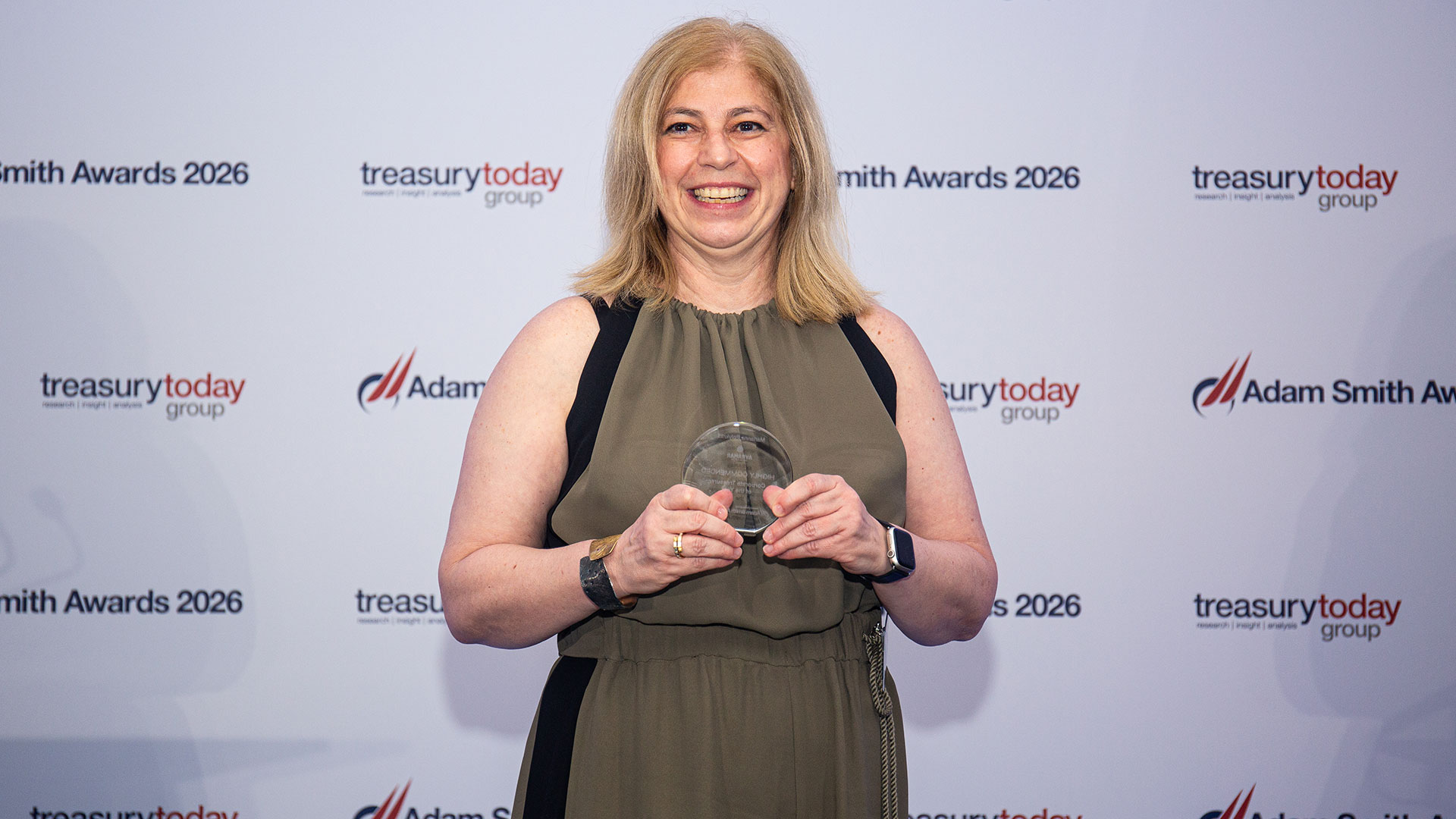
Marianna Polykrati is the Group Treasurer of AVRAMAR Aquaculture, responsible for the group’s end-to-end treasury function across a highly complex, multi-entity and cross-border organisation.
Her role spans group liquidity management, cash visibility and forecasting, banking relationships, funding strategy, payment governance, treasury controls, and the design and execution of the group’s treasury operating model, working closely with senior management, banks and key stakeholders.
Marianna joined AVRAMAR during a highly challenging period, following multiple mergers that had left treasury activities fragmented across legal entities, systems and legacy teams. At the time, treasury operated with limited cash visibility, weak governance, decentralised banking structures and increasing complexity across the organisation, while the business was navigating demanding and intense scrutiny from lenders and stakeholders.
In this environment, Marianna assumed responsibility not only for day-to-day liquidity survival, but for re-establishing treasury as a disciplined, credible and decision-enabling corporate function.
As Group Treasurer, she led the full stabilisation and transformation of the treasury function, beginning with restoring daily cash visibility and structured forecasting, introducing payment governance and approval frameworks, and rebuilding control and accountability across the group. She played a central role in discussion with banking and financing stakeholders providing transparent, reliable liquidity reporting at moments when credibility was critical.
Under her leadership, treasury evolved from a reactive execution unit into a trusted coordination and control centre, supporting senior management decisions during prolonged ownership and restructuring uncertainty.
What distinguishes Marianna as a corporate treasurer is her ability to combine technical treasury discipline with leadership judgement under pressure.
Rather than relying solely on systems or tools, she deliberately rebuilt treasury around clear ownership, process discipline and people, unifying previously fragmented teams into a single group treasury function. Her neutral, outsider perspective – without legacy affiliations – enabled objective prioritisation, calm decision-making and credibility during periods of peak stress.
Marianna brings a background across banking and venture capital, corporate financial analysis, M&A and treasury, with repeated exposure to post-merger integration, restructurings and decentralised operating environments.
Her impact extended beyond treasury execution into strategic decision support, stakeholder alignment and board-level advisory, at moments when the business faced conflicting interests and elevated risk.
From the outset, treasury became a strategic control point for the organisation. Limited cash visibility, post-merger fragmentation and acute liquidity pressure meant that business strategy could not be executed without first restoring decision-grade financial insight.
Between July 2025 and today, her advisory role became particularly critical as the business transitioned from the previous shareholder structure toward a new ownership framework.
During this period, strategic decision-making required careful alignment across the multiple stakeholders’ group, including shareholders, banking partners, management and the Board. Marianna played a stabilising role by acting as a neutral, technically grounded advisor, translating complex financial realities into clear, decision-usable insight.
This helped align expectations and maintain focus on the business’s immediate priorities: liquidity stability, supplier confidence and operational continuity.
Stakeholder engagement was central to this impact. Marianna’s consistent, transparent engagement with banking partners supported standstill discussions and bridge financing, preserving access to liquidity at moments when credibility was under pressure. Equally, her disciplined approach to payment governance and supplier management supported the company’s operational strategy, contributing to the elimination of overdue supplier balances and the restoration of confidence and trust across the supply chain. In parallel, cash reserves were significantly strengthened, reinforcing liquidity resilience while ownership and restructuring processes remained unresolved.
The business delivered a substantial improvement in financial performance, moving from a loss-making position to positive EBITDA within twelve months, reflecting a turnaround supported by financial discipline, liquidity control and credible execution. Importantly, Marianna ensured that treasury was designed to operate independently of ownership outcomes, embedding governance, controls and forecasting capabilities that reduced strategic risk and allowed the business to function effectively despite ongoing uncertainty.
In summary, Marianna’s impact on AVRAMAR’s business strategy has been to anchor the organisation financially during crisis.
Marianna’s leadership extends beyond AVRAMAR into the broader treasury community in Greece. She actively engages with peers and industry forums to share experiences, lessons learned and practical insights from leading treasury through crisis.