The EMEA region of Microsoft’s advertising credit and collections group was dealing with a significant challenge. Account receivables (AR) in EMEA represent 35% of the total AR for Microsoft advertising worldwide and comprises approximately 43% of the agencies worldwide and 51% of the direct advertisers worldwide that Microsoft advertising does business with.
At the start of 2009, Microsoft’s AR in the EMEA region was in the worst position on company record. The percentage of AR which is 60+ days past due date was at 22% in January 2009 and quickly reached 29% in June 2009 (which is almost three times the company’s acceptable limit).
Factors increasing the difficulty in finding a resolution to the growing problem included; the worst economic recession in over 70 years; a high volume of accounts with smaller dollars creating the need for more resources to collect fewer dollars; high volumes of unresolved disputes, many exceeding 365 days in query and multiple languages and cultures in the region.
As Stephanie Alston, Senior Credit Manager, Microsoft, comments, “Collections were delayed and were creating increased credit risk in the recent turbulent economic environment. Furthermore, since these invoices remained uncollected, it impacted our ability to extend credit to new customers or to grow the opportunity with existing customers, thus impacting revenue. Our mission was to manage the credit risk and free up capacity to book additional revenue. At the same time, we wanted to ensure that the process took into consideration ‘customer satisfaction’ and how we could resolve the issues to the satisfaction of the customer and Microsoft.”
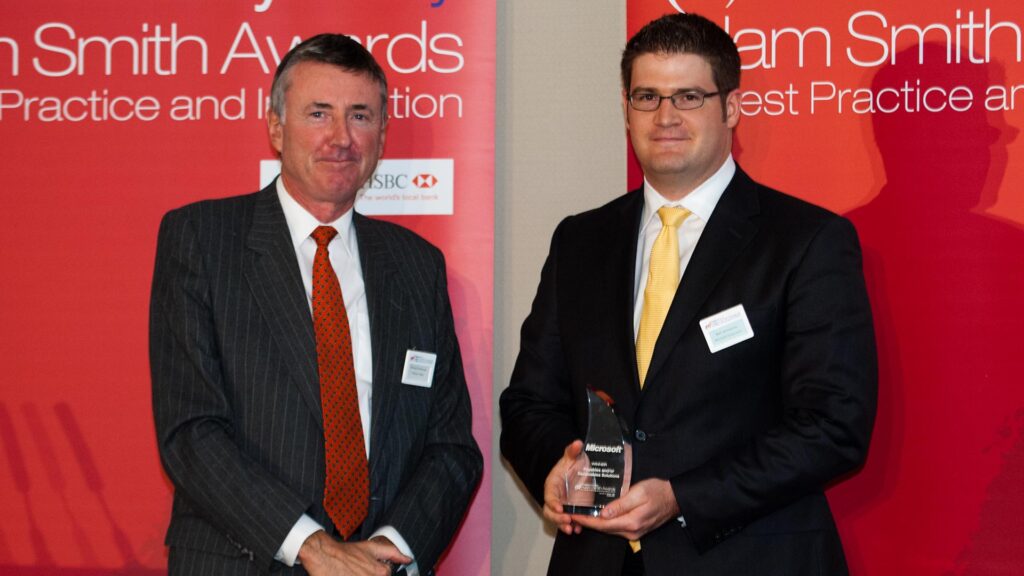
“We believe that these Awards represent Microsoft’s continued focus on innovation and best practices and showcase the collaboration and engagement of our internal teams toward a common goal.”
Microsoft implemented the Customer Management Level Tool (CML) within the organisation. This is an application that was built internally on a Microsoft Office Access™ database, which combines information from four diverse applications and unifies the information into a single source, allowing the team to categorise customers into tiers based on total accounts receivable and systematically manage the dunning process for a large-volume account base with the click of a button. “Throughout the dunning process, the CML delivers hundreds of standardised communications quickly and effectively via email to hundreds of clients, denotes information on queried invoices, and also delivers current month invoice copies in conjunction with the statement capability,” says Alston.
Reporting capabilities include credit hold frequency for a specific client, bulk monitoring and management of customer contact information and detailed communication logs. Within the vendor organisation managing accounts for Microsoft, it was typical for one employee to manage 100-150 accounts within a certain market. With the assistance of the CML tool, the number of accounts managed per head has now increased to three to four times the original estimation.
The project helped collect, on a monthly basis, an average of $66m more quickly than before. At a cost of capital of 10% compounded monthly, the profit to Microsoft for the 16 month time period is therefore $9.3m.
This initiative has helped to realise the continued ’lifecycle of the dollar’ vision of Microsoft Treasury, which is a framework where the theme of increasing the velocity of a dollar in the Microsoft ecosystem is achieved when the company: drives collection efficiency to best possible return on resources employed; increases the amount and speed at which cash is concentrated; maximises financial assets while improving risk-adjusted returns.
“We believe that these Awards represent Microsoft’s continued focus on innovation and best practices and showcase the collaboration and engagement of our internal teams toward a common goal,” Stephanie Alston concludes.