Perspectives

Corporate careers: Neil Xu, PingPong

Published: Oct 2026
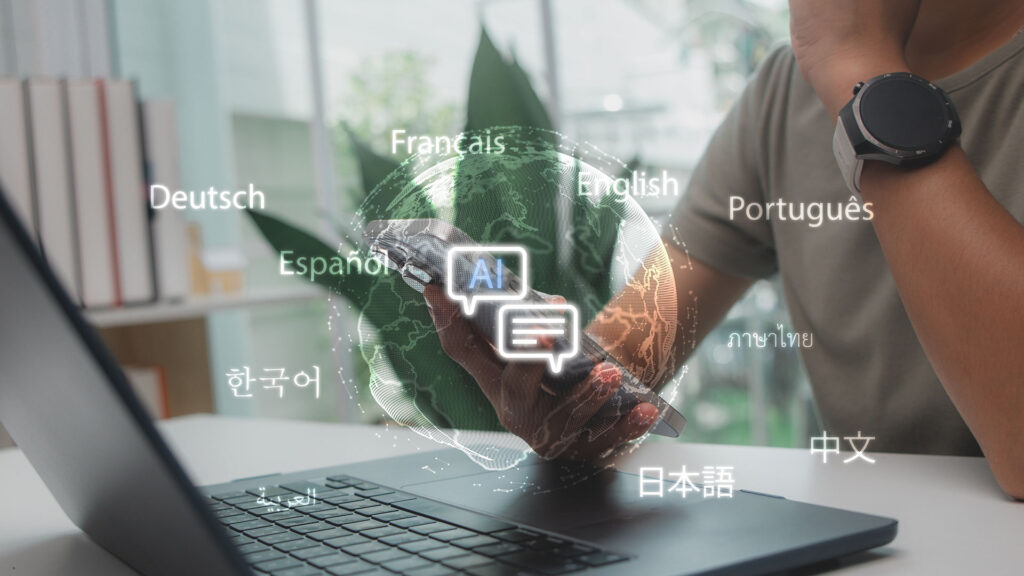
AI translation, digital language

The language of business

Neil Xu, Head of Treasury at global payment infrastructure PingPong, explains why he spies a new digital lingua franca on the horizon: AI.

Neil Xu, Head of Treasury, PingPong

Neil Xu

Head of Treasury
PingPong

Neil Xu’s 20-year career started with KPMG where he learned “accounting: the language of business.” Today, as Head of Treasury at PingPong – a payment service provider (PSP) that processes annualised $300bn+ for 750,000 merchants globally – Xu believes AI is set to become a new lingua franca.

“Artificial intelligence via Large Language Models (LLMs) and other applications of the technology has advanced. It has made tremendous progress in recent years, particularly in its agentic form,” says Xu, a family man who left his childhood home on the coast in Northern China for the bright lights of Shanghai at the turn of the millennium.

“But we are still in the early stages of AI. It has made tremendous progress but it’s still on information management end uses, such as improving data forecasting, visibility, aggregation, presentation, pattern spotting for anti-fraud purposes on payment flows, and so on.”

In the future, Xu believes AI will play a much deeper role. He argues that its agentic guise is heading towards decision-making responsibilities, “with appropriate governance of course.”

“Allied to the web of interconnectivity being encouraged by the increased use of open application programming interfaces (APIs) as a means of easier data exchange and connectivity, and the nascent web 3.0 era where the blockchain represents a ‘new net’, we can expect to see AI automating more processes,” he adds.

AI automation

End uses on machine-to-machine (M2M) payments are a possibility. One example is the use of conditional milestones in a manufacturing step involving a 3D printer and component part suppliers. Another application might be consumers restocking their fridges with groceries via an AI agent that coordinates the food, delivery and payment. All these Internet of Things (IoT) ideas are coming into view.

“As a treasurer, I want to see real-world end uses on smart routing logistics in the physical and financial supply chain. AI can help choose the fastest, cheapest and most efficient payment routes for our merchant clients,” says Xu.

He points out this can span to dynamic trade finance pricing and flows as well, alongside everyday payment processing on increasingly real-time domestic payment infrastructures. These are bilaterally linking around the world. There is also still room for improvement on cross-border payments.

Real-time

Real-time capabilities help data flow more freely and aid liquidity optimisation and risk mitigation on foreign exchange (FX) flows back into home currencies. Getting in and out quickly, and avoiding cut-off times, can be beneficial.

“The rise of real-time during my career has been a positive ongoing theme,” says Xu, who adds that real-time capabilities can help better, more accurate cash flow forecasting (CFF) and many other aspects of treasury, especially if buttressed by supporting technologies like AI.

Anti-fraud capabilities are also a key aspect of the concurrent real-time and AI trends that will increasingly come to the fore in future years, believes Xu. Combined, these technologies can lead the fightback against criminals that increasingly deploy these tools themselves – for example, by sharing target data on the dark web and moving money out of accounts before a bank check can catch up with them.

Federated sharing of anonymised privacy-enhanced data flows among banks and PSPs can help financial institutions (FIs) collectively defend themselves against this type of fast, digitised fraud. This FI sharing trend mirrors how criminals themselves share data, without impinging on privacy laws due to the anonymisation aspect of it. Collectively fighting back against criminals in an increasingly digitised real-time world makes sense, particularly where AI models can pre-emptively identify suspicious activity if fed enough real-time data.

PingPong is on top of these trends, especially AI, argues Xu. It has already deployed an AI-enabled anti-fraud and compliance system, for example, to better protect its internal treasury and external client flows, with help from J.P. Morgan.

AI anti-fraud and compliance project

PingPong is a top three Payment Service Provider (PSP) in China by market share, collecting and disbursing funds for merchants worldwide across e-marketplaces, direct-to-consumer (D2C) platforms and business-to-business (B2B) channels in 200+ markets. Its treasury manages funds on behalf of many business clients and has a raft of anti-money laundering (AML), Know Your Customer (KYC) and other such compliance obligations that it must comply with, which may differ in certain parts of the world.

Anti-fraud and compliance are therefore major issues, especially as by 2025 transaction volumes were rising 53% year-on-year and fraud with it. Meanwhile, Request for Information (RFI) response times with banking partners that provide payment rail access, liquidity and settlement capabilities remained stuck at ten days. Manual processes were still prevalent too. It was clear action was needed.

Over the last two years, PingPong has developed a new in-house proprietary AI-enabled risk architecture with two agents to solve the problem:

  • The first AI agent ingests data, such as KYC information, transactions records, invoices and so on to identify threats. The AI model spots common signatures of fraud activity, such as shared beneficial owner patterns, timings and payment tools chosen to refine and improve risk scores that require investigation. This has reduced false positives and improved efficiency, client protection and performance.

  • The second AI agent drafts any possible threats into RFIs to bank partners like J.P. Morgan, which assisted in the rollout. The agent also compiles regulatory narratives to aid bank interactions and compliance reporting. A human still decides what to investigate.

“Our AI model now does the first screening. It has sharpened our identification of any potential fraud or compliance problems, which additionally cuts false positive rates and unnecessary manual investigations,” explains Xu, while stressing that performance has improved with the same headcount.

“Bank RFI response times have consequently halved to five days, and our IT estate and customers are better protected than ever before. The platform is now being rolled out to Canada, then South-East Asia and latterly more risky emerging markets like Brazil where it’ll have to learn the particular risk factors there.”

Ascending the mountain

Xu joined KPMG after getting his degree in International Economic Law and Accounting from Shanghai University of Finance and Economics. He also had a sojourn getting a master’s degree in Corporate Management in Beijing from Renmin University of China.

That aside, the qualified CGMA/CIMA management accountant is a Shanghai loyalist who lives in the 21st century city that has grown up around its ancient core as China’s economy has expanded. He uses its fantastic connectivity and future-proofed infrastructure to commute via China’s renowned fast trains back to his home in Hangzhou in little over an hour. There he likes to relax with his family after his busy workday in the centre of the city.

Outside of work, Xu loves hiking. “I go to the mountains to relax and enjoy myself. It’s also something I do with my colleagues at PingPong, which I joined in October 2020 as Group Vice President, responsible for the company’s finance function, treasury operations, and the management of domestic and overseas financial institution (FI) channels.”

PingPong is a PSP for merchants globally. It has 44 offices around the world, covering 50+ currencies with associated FX risk mitigation and other processing options via its bank partners, such as J.P. Morgan. It also has major in-house capabilities thanks to the proprietary software it develops.

“Four times a year, the executive team at PingPong gathers in the mountains outside Shanghai in the Chinese interior for our formal quarterly business reviews,” says Xu. “We then hold informal discussions about the future of the company and the industry. The mountains give us space to think clearly about the future. I’ve come to like them in my time off, in my personal life as well.”

Treasury career

Xu has already seen ‘the future’ become a reality of modern digitised business, although there is always another technological advance that can be incorporated to further enhance corporate treasuries and business.

“When I look back over my career over 20 years and more, it has followed an interesting path,” he says. “I worked for a number of large foreign multinational corporations (MNCs) initially after graduating from university and accountancy at KPMG. I went to work at Nokia China and Logitech in China for example – the latter being my first encounter with treasury as a function.”

Xu as a controller at Logitech China focused on expenses and financial planning and analysis (FP&A) before transitioning into an overall management role. This tasked him with treasury responsibilities like capital allocation, money movement to make payroll and cash management to optimise liquidity, as well as risk opportunity and mitigation tasks. As Xu explains, this was a much more dynamic role that was central to the business.

“Treasurers increasingly serve their firms as a business enabler as well, which I like, especially as AI-enhanced automation advances,” says Xu. “This trend is negating our traditional payment approval and prior manual procedures, but that’s OK. It frees treasurers up to do more interesting work.”

After working for Logitech China, Xu then spent over a decade working for domestic Chinese ‘new economy’ firms including iTutorGroup. “These were acting like early fintech firms at the time using financial technology and other new digital options to disrupt traditional ways of doing business,” he notes. “I enjoyed working in the new economy.”

Today, Xu reflects he has “gone full circle” as he is now once again working for an MNC – although he points out that PingPong has a strong focus on localization, and one that acts culturally like the start-up firm that it once was. While PingPong was already well advanced along its growth path when Xu joined the company in 2020, he says that scaling the business up has been a “fun challenge”.

The digital future

“Since the turn of the decade, AI is definitely having an impact,” continues Xu. “AI is empowering treasury management and will have a still bigger role in future. It can provide intelligent bank account management, for instance, and thereby help to rationalise the number of banks that treasuries use. This cuts costs.”

The company has already used J.P. Morgan’s Kinexys blockchain-based suite of payment and digital asset products to further explore how future transactions might look using the equally disruptive distributed ledger technology (DLT). Xu says that DLT is another tech that can shape the future.

The company is also using virtual accounts with J.P. Morgan to gain efficiencies on cross-border transactions and encourage more digitisation and abstraction. As Xu explains, “This is important in a smaller world where borders are shrinking as real-time data-centric capabilities enhance.

“However, as AI plugs into this increasingly digitised and data-centric world to improve the accuracy and analysis of the vast information flows available to it, the strategic role of the human becomes more important.”

In closing, Xu reflects that AI can automate and analyse things – but when it comes to yield and risk management, a human being is still better suited for seeing something out of the ordinary that doesn’t compute. “For spotting an unidentified opportunity or a black swan risk lurking in the background, experienced humans are pretty good,” he adds.

As such, Xu argues that soft skills, already crucial capabilities for a modern treasurer, will become more important in an increasingly AI-dominated and automated world. Speaking the language of business is still a human activity after all – for now.

Join our global community

Creating a free account helps us to understand our community better, and tailor our content and events to suit your needs. You can unsubscribe at any time.

Already have an account? Sign in

Search for your company; if not found, select 'Other' and enter it manually below
  • • At least 8 characters
  • • At least 1 uppercase letter (A-Z)
  • • At least 1 lowercase letter (a-z)
  • • At least 1 digit (0-9)