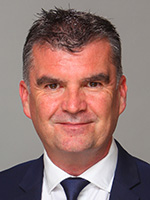
Today’s investment landscape is nothing if not uncertain. For one thing, says Gary Skedge, Portfolio Manager, Liquidity at Federated Hermes, ongoing geopolitical issues in the Middle East are continuing to cause disruptions to energy output and, consequently, supplies.
“With Brent crude recently1 hitting $108.00 per barrel and sharp increases in European natural gas prices adding to an already inflationary outlook, markets have had to reprice expectations for central banks’ official rates, as conflicts in the Gulf show no signs of abating,” he adds.
The European Central Bank (ECB) recently2 increased interest rates by 25 basis points, with Christine Lagarde warning of further rises if there is no retracement in energy prices. Meanwhile, higher inflation figures paved the way for a rate hike in the US, with the Federal Open Market Committee (FOMC) increasing the target range for the federal funds rate for the first time in three years.
In the UK, where inflation is approaching 3% alongside a loose labour market and subdued growth, higher rates are likewise expected later in 2026.
Balancing yield, liquidity and risk
So how can treasurers balance yield, liquidity and risk in this environment? According to Skedge, it comes down to sequencing rather than trade-offs.
“Liquidity certainty comes first – treasurers need to know the cash is there when they need it, full stop,” he explains. “Capital preservation is a close second, particularly with markets still capable of sharp, fast moves. Only once those two boxes are ticked does yield enter the conversation.”
The good news, he notes, is that treasurers don’t have to sacrifice much to achieve their goals. Money market funds, for example, can still offer a meaningful pick-up over bank deposit rates, while providing same-day liquidity and a diversified pool of high-quality issuers.
“That’s really the philosophy behind our own approach to liquidity management – a relative value process that looks across the yield curve, across sectors and across security types, underpinned by in-house credit research, with the aim of balancing yield and capital preservation.”
Evolution of corporate cash portfolios
Against this backdrop, corporate cash portfolios are continuing to evolve. He says many treasurers are currently making various changes to their cash portfolios, from running larger cash buffers to reviewing their investment policies.
1. Increasing the cash buffer
He says some treasurers are now running larger cash buffers than they would ordinarily be comfortable with.
“Some of that reflects strong balance sheets and healthy cash generation,” he says. “But a good deal of it is precautionary. Geopolitical risk – from the escalation of conflict in the Middle East to trade policy shifts and election-cycle uncertainty – has become a genuine investment variable, rather than background noise.”
According to Skedge, this has been demonstrated in fund flows, with periods of broader flight to cash whenever tensions spiked. “For many corporates, especially in dollar markets, elevated buffers now reflect embedded cash management habits that persist regardless of the rate cycle,” he adds.
On another note, geopolitical developments are highlighting the importance of disciplined issuer selection. He notes Federated Hermes has not historically had exposure to issuers in geopolitically sensitive regions such as the Middle East, Russia or Ukraine. “We have also avoided certain Chinese issuers, due to non-financial disclosure concerns.”
2. Harnessing cash segmentation
Where yield is concerned, cash segmentation is one approach that can enable treasurers to maximise potential returns while meeting their liquidity needs. According to Skedge, cash segmentation is “becoming close to standard practice among larger corporates, and we expect that trend to continue.”
In short, this approach sees treasurers split their cash into operating, reserve and strategic buckets based on when cash will actually be needed and then match the investment horizon to each bucket.
“Operating cash – day-to-day working capital – stays in same-day liquidity vehicles. Reserve cash, earmarked for nearer-term but less immediate needs such as tax payments or dividends, can move a little further out the curve,” Gary Skedge explains. “Strategic cash, with no near-term call on it, can be invested with a longer horizon and a greater yield pick-up.”
“Done well, segmentation can let treasurers capture meaningfully more income across the portfolio without changing their overall risk appetite. It’s exactly the kind of exercise we help clients work through, drawing on a fund range built to suit each part of that curve.”
3. Reviewing the investment policy
According to Skedge, investment policy reviews are being driven by the changing regulatory landscape, as well as by treasurers’ evolving comfort with risk.
“On the regulatory side, ongoing reform of money market fund rules in various markets is changing the mechanics of the funds treasurers use, and that needs to be reflected in approved-instrument lists and concentration limits,” says Gary Skedge. “On the practical side, many policies were written for a very different rate environment and simply don’t reflect today’s opportunity set.”
As such, treasurers are formalising segmentation frameworks and widening approved counterparty and fund lists. They’re also building in more explicit language around geopolitical and operational risk, not just credit risk.
“We keep clients close to this conversation through our own Short Term Investments Committee, which brings together our liquidity specialists monthly to share views on the rate and regulatory landscape,” he adds. “It’s less about loosening the rules and more about making sure the policy matches how the business actually invests today.”
4. Seeking diversification beyond bank deposits
Finally, he has observed that while bank deposits still matter, the share of corporate short-term portfolios held in bank deposits has shrunk – “and that’s not an accident.”
Concentrating cash with one or two relationship banks equates to concentrating counterparty risk, he explains. “And treasurers have become less comfortable with that, particularly after periods of banking sector stress in recent years.”
At the same time, he says the pool of low-cost bank funding has shrunk due to central banks unwinding the excess liquidity built up during years of quantitative easing, affecting what banks are willing to pay on deposits.
“Money market funds and direct instruments such as Treasury bills can let treasurers spread exposure across a wide range of high-quality issuers rather than one or two, while aiming to meet liquidity requirements,” he concludes. “It’s part of why we run a broad range of sterling, euro and dollar-denominated liquidity strategies – so that diversification can extend across currencies and managers, not just instrument types.”
Learn more about Federated Hermes’ liquidity capabilities at www.federatedhermes.com/liquidity