

Home

How Bacardi developed a structured, data-driven approach to improving working capital

Published: Sep 2026
Adam Smith Awards 2026

Judges’ Choice

Highly Commended Winner

Bacardi Limited

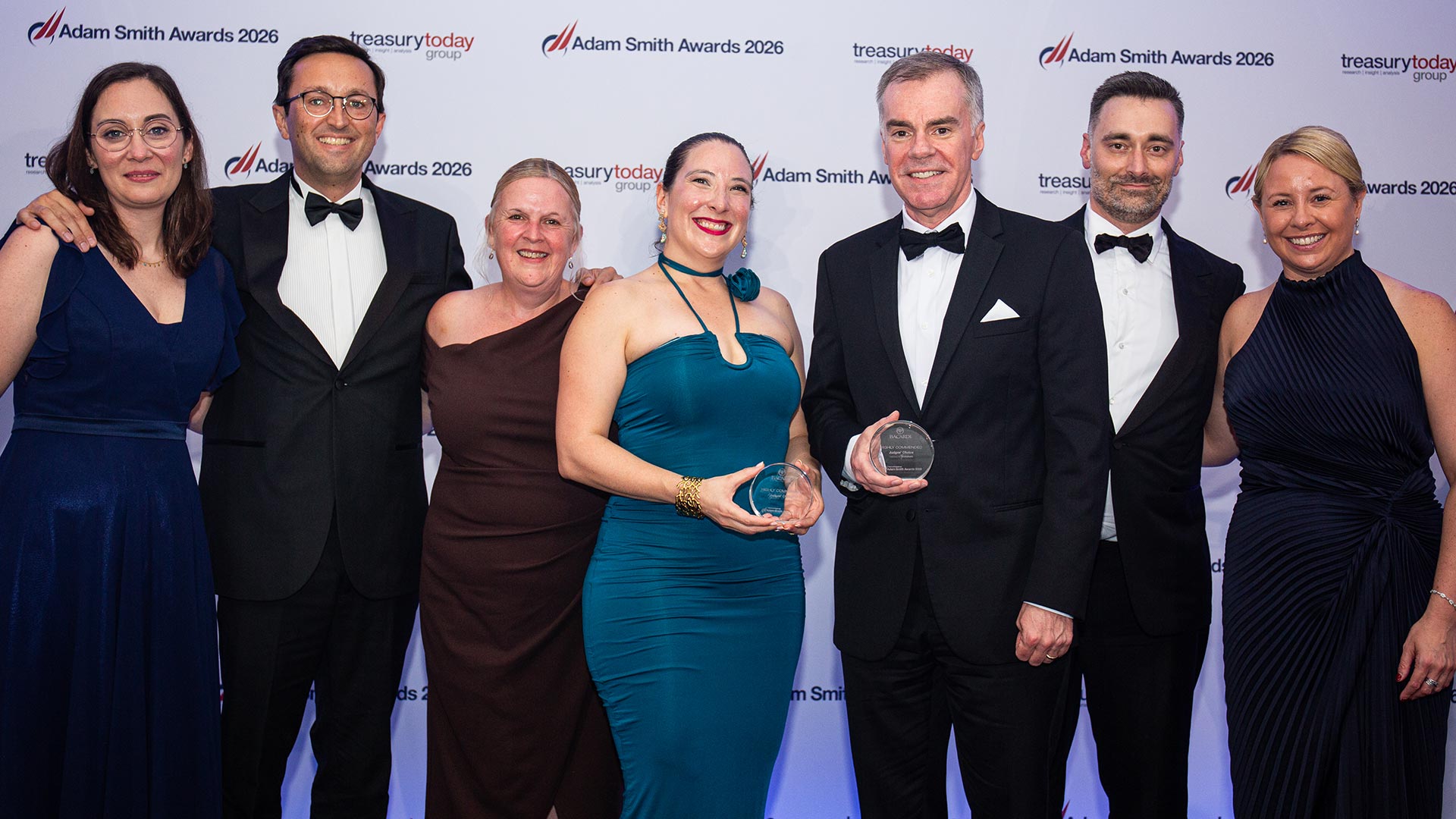
Photo of Violets Sanchez, Vincent Morel, Michelle Reader and Gabriela Guillen, Bacardi Limited and John Dower, Scotiabank.

Albert Latour

Global Corporate Controller
Bacardi logo
Bermuda

Bacardi Limited, the world’s largest privately held international spirits company, produces, markets, and distributes spirits and wines.

in partnership with

Scotiabank logo

The challenge

Prior to 2024, Bacardi maintained strong working capital management and had achieved incremental improvements to its days sales outstanding (DSO) and days payable outstanding (DPO). However, these efforts were not tracked centrally, nor were they consistently structured across regions and business units to drive sustainable delivery.

The catalyst for change emerged during an early-2024 engagement with Scotiabank, when a peer benchmarking analysis revealed that Bacardi’s working capital performance lagged several comparable organisations by a meaningful margin.

The solution

To achieve this, Bacardi sought a more structured, data-driven approach to improving working capital globally. Consequently, Bacardi launched a project to improve working capital and introduce cash conversion cycle targets and partnered with Scotiabank to help drive this transformation.

Bacardi’s CFO, in collaboration with the board of directors, commissioned a comprehensive working capital diagnostic to quantify potential value and determine the organisational changes required. The company engaged Scotiabank’s Corporate Finance Advisory group to assess all components of working capital, benchmark global performance, and identify best in class practices.

The analysis identified at least US$150m of potential value through working capital improvements in receivables, inventory and payables. The cash conversion cycle (CCC) metric was selected as the ideal approach – given the ease with which the concept could be translated to clear targets for the business units.

Best practice and innovation

Bacardi’s introduction of working capital KPIs into the annual incentive plan was key to driving performance improvement. This alignment of incentives, combined with transparent performance metrics, created a cultural shift that embedded working capital discipline into the company’s operations.

This cultural shift was reinforced through strong executive sponsorship, consistent governance routines, and targeted training programmes that embedded working capital discipline into day-to-day decision making across all regions. Bacardi more than doubled its operating cash flows during its fiscal year 2025 when compared to its prior fiscal year, largely because of year-on-year improvements in working capital generated by the CCC initiatives.

Key benefits

  • Cost savings.

  • Improved key performance indicators (KPIs) or metrics.

Since implementing the solution, Bacardi has achieved measurable improvements in all three components of working capital: receivables, inventory and payables.

During its fiscal year 2025, Bacardi reduced its DIOH (non-aged) by over 15 days, extended its DPO by over 25 days, and reduced DSO by day one. These gains have translated directly into enhanced ROIC and improved financial flexibility.

The project met its objective of accelerating cash generation and establishing a sustainable, metric driven operating model. Most importantly, the CCC concepts have been firmly embedded into organisational ways of working, resulting in a sustainable model and approach to create value through balance sheet optimisation.

What made this solution truly impactful was its focus on people, not just metrics. Prior to this project, Bacardi measured using Free Cash Flow targets, a measure that was understood at some levels but not through the entire organisation. By adopting clear and concise CCC targets, Bacardi embedded the language of CCC into the entire organisation.

Regional leadership teams also began organising working teams focused on identifying CCC opportunities and initiatives within their regions to help deliver against the targets.

More importantly, the language of CCC has been adopted throughout the organisation. Hitting the targets became a ‘fun’ challenge. Many regional finance meetings now start with a CCC slide, showing where the region sits on meeting their targets. What was originally seen as a chore and extra work is now seen as an enabler, and something that all employees can impact. The cultural adoption of CCC provides a durable foundation for future growth, ensuring that new initiatives, markets, and teams can scale with a consistent, cash-focused operating mindset.

Alton McDowell

Managing Director, Global Head, Corporate Banking, GBM U.S., Scotiabank

Chad Wallace

Executive Vice President, Global Transaction Banking, Scotiabank

Bacardi’s working capital transformation stands out for its ability to translate complex financial concepts into clear, actionable targets across the organisation. By introducing a consistent cash conversion cycle framework and embedding performance-driven KPIs into incentive structures, Bacardi aligned teams globally around a shared objective. In partnership with Scotiabank, this approach drove measurable improvements across receivables, payables and inventory, while strengthening governance and decision-making. The result is a more disciplined, cash-focused operating model that is now embedded into day-to-day operations. We are proud to have supported Bacardi on this achievement.

in partnership with

Scotiabank logo
Adam Smith Awards sail

The Adam Smith Awards are the industry benchmark for best practice and innovation in corporate treasury. The 2026 awards attracted 635 nominations. To find out more please visit treasurytoday.com/adam-smith-awards

Join our global community

Creating a free account helps us to understand our community better, and tailor our content and events to suit your needs. You can unsubscribe at any time.

Already have an account? Sign in

Search for your company; if not found, select 'Other' and enter it manually below
  • • At least 8 characters
  • • At least 1 uppercase letter (A-Z)
  • • At least 1 lowercase letter (a-z)
  • • At least 1 digit (0-9)