Technology

Stablecoins are growing but are payment uses?

Published: Sep 2026

Stablecoins can speed up 24/7 cross-border intercompany and trade payments, aiding liquidity management and treasury. But are coins being used in the real world as ‘cash’ to pay suppliers and on remittances?

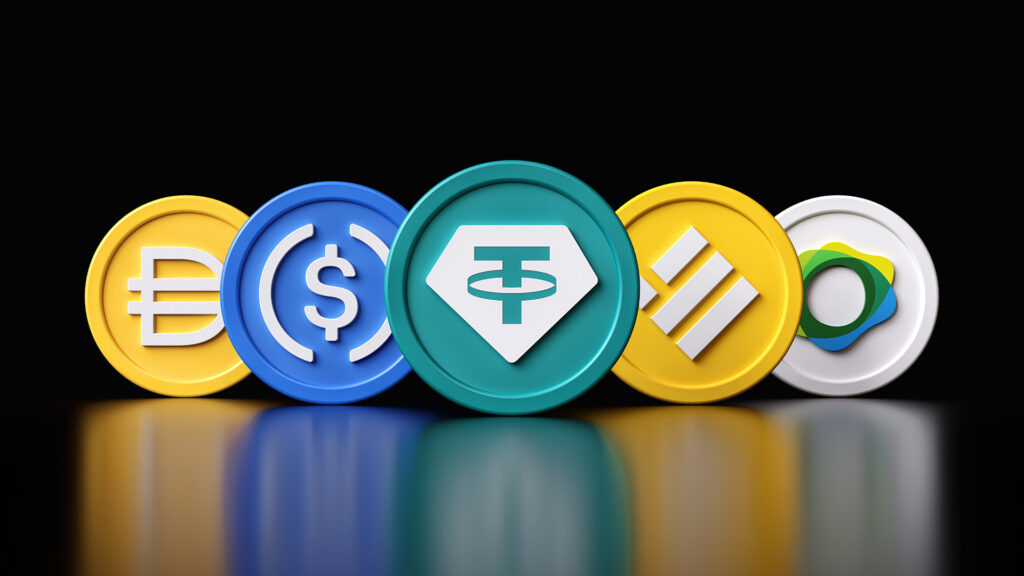
Five top stablecoin tokens

Stablecoins are a form of less volatile cryptocurrency pegged to the value of a real-world asset like the US dollar (USD) fiat currency, commonly via cash reserves or US Treasury T-Bills, purchased on a 1-2-1 par level with redemption mechanisms. Coins are hosted on a blockchain that is reliant on the underlying distributed ledger technology (DLT).

As the name suggests, stablecoins seek to reduce the volatility of other cryptocurrency options like the original unpegged Bitcoin (BTC) application, which experiences wild price swings that encourage volatility and speculative trading.

Stablecoins are often used as an on/off ramp to decentralised finance (DeFi) applications, allowing digital assets to be parked in non-bank stores or settled and moved into fiat currency for redemption back into the non-DLT traditional finance (TradFi) world.

Stablecoins are also here and now, unlike another option of cryptocurrency – central bank digital currency (CBDCs). These will eventually come in the form of the digital euro, pound and perhaps dollar, although the latter faces a political and cultural bias towards private sector stablecoins. The former is slated for issuance in 2029, in an attempt to keep control of the euro money supply.

The EU Markets in Crypto-Assets Regulation (MiCAR), US GENIUS Act, and others have sought to provide an immediate private sector regulatory framework. The Hong Kong Monetary Authority’s (HKMA) Regulatory Regime for Stablecoin Issuers applies there, but the field is still evolving.

As Heiko Nix, Global Head of Cash Management and Payments, Siemens, says: “Stablecoins are one packaging of tokenised money among three, alongside CBDCs and tokenised deposits.” He favours the latter as they come with stronger private and additional bank trust and TradFi interoperability. BTC and non-pegged options are another variant, but more speculative.

Popular stablecoins, blockchains and payment options

Popular blockchains include Ethereum and Solana, supporting coins like Tether (USDT) or Circle (USDC), the two most popular. The latter offers a euro-pegged option as well, EURC, in an attempt to address sovereignty concerns.

When share of transactions is examined, Circle’s USDC (which is US headquartered, unlike Tether) is “by far the dominant payment stablecoin,” says Alenka Grealish, Principal Analyst, Banking, Celent. “PayPal and Ripple are the other main coin issuers that we see targeting the payments sector.”

However, PayPal’s USD (PYUSD) coin tends to smaller commerce transactions, so may not be of immediate interest to multinational corporations (MNCs). Having said that, François Masquelier, Chair of the European Association of Corporate Treasurers (EACT) and of its domestic Luxembourg member, ATEL, argues there are already some real-world business-to-business (B2B) use cases in PYUSD citing: “How PayPal settled invoices with EY and Google for cloud services in its stablecoin, and extended it to Xoom remittance corridors.”

International transfers by means of its PYUSD stablecoin were made to Cebuana Lhuillier in the Philippines and Yellow Card in Africa on PayPal’s Xoom platform in 2025. This is an end use example of the technology and coins moving towards mainstream uses.

PayPal is presently subject to an unwelcome US$53bn takeover from rival payments processor Stripe, which is building out its own stablecoin and DLT-based tokenised infrastructure via its earlier Bridge takeover and partnerships with the likes of Visa. This deal aims to allow fintechs to launch programmatically-issued, stablecoin-backed payment cards with Bridge’s product capabilities and Visa’s distribution, plus an in-built settlement layer. Again though, it’s quite retail and consumer card focused for MNCs.

Other coins include Ripple’s RLUSD and its associated ecosystem, plus First Digital’s FDUSD, and StraitsX’ XGSD on its rail ecosystem pegged 1-2-1 to the Singapore dollar. Also out of Singapore is the Paxos-issued Global Dollar (USDG) that shares revenue across a cross-border network that includes Robinhood, Nuvei and others. The cross-border element is attractive as DLT-based velocity of payments means traditional cut-off times are avoided, as are foreign exchange (FX) and other risks. These pros are aiding stablecoin adoption.

Market size

The CoinGecko database aggregates information about 18,000 cryptocurrencies of all types – not just stablecoins – across 1,000 exchanges, totalling a US$2.2trn global market cap. But this figure is mainly comprised of trading activity – it’s not specific payment uses. For that, a more realistic figure can be obtained via McKinsey’s Q126 report Stablecoins in Payments, which uses Artemis Analytics data, to estimate US$390bn p.a. of global payments were made in stablecoins in 2025, a doubling since the prior 2024 full-year figures.

However, stablecoins only represent 0.02% of all global payment types. There is strong growth potential, but from a tiny start base.

Benefits of stablecoins

“Stablecoins have the ability to shorten long transactional chains, speed up cross-border payments and enhance client experience (CX), especially in the global south. There might be slower infrastructure there, more financial institutions involved and increased FX risk to an MNC that doesn’t want slow repatriation,” says Naveen Mallela, Global Head of Payments at Standard Chartered (SC). “The speed, transparency and low cost of stablecoins also bring extra efficiency and data carrying capabilities that reduce friction.”

In Africa, for instance, or Argentina, this speed and FX mitigation could be very useful. Ditto if you’re a trader with a ship docked in port on Friday after the payment cut-off, but still want to instantly release the liquidity associated with that goods delivery. Blockchains and stablecoins running on them, as a payment and liquidity tool on the DLT ‘rail’, can do that for a corporate treasurer, in conjunction with ‘smart contract’ capabilities. “Opening up new markets and the programmability of coins are other key benefits, alongside enhanced speed and cleaner, more data-centric efficient payment chains,” adds Mallela.

SC recently announced it is embedding USDC access directly within its institutional offering. This comes after a deal with Circle that negates the need for a direct account with them and instead allows minting and redemption of USDC coins natively on SC’s own platform, initially out of its DIFC operation in the UAE. Circle has a number of deals with multiple partners – for instance, Visa allowed USDC settlement on its processing platform at the turn of the year.

New coins

SC is a founding partner of Anchorpoint. This joint venture has been granted a fiat Stablecoin Issuer Licence by HKMA. It was the first to get it on 10th April, alongside HSBC, which will issue its own tokens. The partners involved in Anchorpoint are SC, telecoms group HKT, and digital assets firm Animoca Brands.

Anchorpoint is working towards an imminent Phase one launch of a regulated HKD At Par (HKDAP) stablecoin. The aim is to unlock the coin’s full potential as a new form of settlement on payment and trade flows.

Additionally, SC is part of the OUSD consortium that includes major players like Mastercard and Coinbase. More than 140 businesses launched the Open USD stablecoin and network on 30th June, causing a temporary downturn in Circle’s shares, as the potential threat to the pre-eminent payment application was assessed by the market.

OUSD is the first stablecoin designed as open infrastructure to try to get interoperable scale to give businesses’ the economics, governance and reliability they need to move money fast, efficiently and safely.

Presently, stablecoins are only a tiny proportion of global payments because they don’t have the governance, scale, resilience, history and interoperability from different parties to match TradFi ISO 20022-enabled payments on incumbent cross-border platforms like SWIFT.

On the payment application it is the pegging mechanism that gives corporate and consumer end users much greater certainty that a dollar is worth a dollar. This reduces the volatility and ups its suitability for payment applications.

Stablecoins can be used as:

  • A store of value.

  • Infrastructure for cross-border money movement exchange.

  • A platform for fintech developments.

“Stablecoins are the on-chain ‘cash leg’ payment mechanism that the rest of the tokenised ecosystem was waiting for,” says Masquelier, envisaging on/off access to tokenised MMFs, digital bonds and marketplaces, M2M programmable payments and so on.

“That said, let us keep perspective: measured against global ISO 20022-enabled payment flows, corporate usage remains a rounding error. For corporates, the strategic point is this: stablecoins are the entry ticket to that broader ecosystem,” says Masquelier. “A treasurer who masters stablecoin operations – custody, controls, accounting, compliance – has built the muscle to operate in the whole tokenised marketplace of the next decade. I see a layered ecosystem emerging rather than a winner-takes-all contest:

  • Regulated stablecoins for open-loop, cross-border and marketplace flows.

  • Tokenised bank deposits for intra-bank corporate settlement with balance-sheet protection.

  • And, eventually, Wholesale CBDC or solutions like Fnality for interbank settlement.”

Siemens’ Heiko Nix isn’t so bullish, cautioning that even though the technology is established and proven, the surrounding standards aren’t there yet. “From where we sit, stablecoins are primarily a technical innovation, not a monetary one,” he says.

“Economically, both bank deposits and stablecoins represent claims against an issuer denominated in a reference currency,” he continues. “The fundamental innovation of stablecoins is therefore less the unit of account than the ‘rail’ on which it moves” – in other words, DLT.

“What’s new is the rail and what it offers,” continues Nix, as he agrees the key pros of coins are: 24/7 availability; no cut-off times; programmability and settlement in seconds. “Those are the problems worth solving,” he adds, while stressing the potential for cross-border reach on a common universal infrastructure is another pro. Whether the money on that ‘rail’ is called a stablecoin, tokenised deposit or a CBDC is the least interesting variable. The payment instrument itself doesn’t matter. Instead, the infrastructure and integration layer does. “The interesting layer is above the instrument: programmable business processes,” adds Nix, although he does point out programmable money alone isn’t enough: invoicing; delivery evidence; tax handling and reconciliation have to digitise in parallel; and enterprise resource planning (ERP) systems must align.

Cons

None of the ‘rail’ pros of stablecoins are unique, in Nix’s opinion. “Instant payment schemes already deliver 24/7 settlement in seconds, and standing instructions have offered basic programmability for decades,” he explains. “What stablecoins add is the packaging – these capabilities combined on one rail, across borders and currencies.”

There are some disadvantages with stablecoins, believes Nix, listing:

  1. The risk structure – a stablecoin is a claim on a claim: the holder is exposed not only to stablecoin issuers, but indirectly also to the quality, custody and liquidity of the reserve assets maintaining the peg. The USDC episode in March 2023, when Silicon Valley Bank held part of Circle’s reserves as it collapsed imperilling the peg, showed this.

  2. Fragmented reach: across multiple issuers and blockchains doesn’t aid commonality, or interoperability.

  3. Limited ERP and TMS integration: is problematic. Stablecoin payments aren’t yet embedded in corporate systems and processes to the same extent as conventional bank payments.

Overcoming the treasury integration issue

A potential solution exists with SAP’s Digital Currency Hub. This embedded solution connects core ERP systems to blockchain-based payment rails, thereby allowing businesses to trigger 24/7, instant, low-fee cross-border B2B payments using stablecoins like PYUSD, USDC and EURAU. The latter is a MiCAR-compliant euro stablecoin issued by AllUnity that runs on Ethereum, Solana and Arbitrum.

In a similar vein, Kyriba has partnered with Merge, a regulated stablecoin payment and routing platform to try to give its treasury management system (TMS) clients embedded stablecoin access and DLT functionality.

Kyriba has done a separate deal with Fipto, Europe’s nascent regulated stablecoin infrastructure provider, to facilitate the on-boarding of Ledger, a digital wallet and asset security firm, and of Mantu consultancy. The deal allows them both to deploy live stablecoin payment flows in Kyriba’s TMS. Ergo a regulated stablecoin payment rail is now live, fully reconciled and embedded directly within their enterprise treasury workflows. This is a real-world usage example on automated supplier payments and cross-border intercompany flows.

Tokenisation is better?

“The most evident use of DLT in financial services is, in our experience, not public stablecoins but tokenised bank money,” says Nix, pointing out that Siemens has been running 1,000+ payments per month in production on J.P. Morgan’s Kinexys platform since 2021, with self-funding accounts and balance-triggered sweeping: near real-time, programmable, inside our existing bank relationship.

Stablecoin use cases exist where banking infrastructure is weak: high-inflation economies and certain remittance corridors in which FX and other risks are high. “For a corporate operating mainly in well-banked markets, those are corridor-specific problems, not a strategy,” he says.

Nix’s preference for tokenised deposits is clear. As he says: “We use tokenised bank money: Kinexys (since 2021); Partior atomic settlement via Standard Chartered (2024); Citi Token Service (2025); EUR and USD blockchain-based accounts in Singapore, Frankfurt and New York.”

Use cases

The fact stablecoins attack three chronic frictions that traditional rails haven’t fully resolved around time, cost and 24/7 availability, causes EACT’s Masquelier to have a more optimistic view. He maintains instant settlement with no cut-off times, no ‘banking hours’ or chain of correspondent banks each taking a margin and a day, are driving adoption.

“For treasurers, these pros translate into use cases,” says Masquelier, listing:

  • Cross-border B2B payments on inefficient corridors.

  • Repatriation of trapped cash from exchange- controlled jurisdictions.

  • Instant intercompany rebalancing outside banking hours.

  • Marketplace and gig-economy payouts.

  • Programmable payments via smart contracts.

“The examples are no longer anecdotal,” says Masquelier. He cites PayPal USD’s EY and Google invoices and Xoom remittance activity, as well as Mastercard’s move on BVNK – one that connects on-chain payments and fiat rails via the US$1.8bn acquisition. “This confirms payment incumbents see the same signal,” he says. “I would argue stablecoins are the most evident production-scale application of DLT in FS. They have achieved what tokenised securities and CBDCs haven’t yet – real, daily, commercial usage.”

Conclusions

“Stablecoin ecosystems have plenty of issuers, but few corporate counterparties – a classic chicken and egg situation,” argues Siemens’ Nix. Ultimately, adoption is not driven by the instrument. What matters are features built on top: 24/7 availability, instant settlement, programmability and seamless integration into corporate processes.” That ecosystem standardisation and integration isn’t fully there yet, even though the tech is.

These features can come from different avenues and routing options, with stablecoins undoubtedly joining the mix. But corporates treasuries are the clients and cannot be expected to delve into every scenario. Those that deliver the most comprehensive service – a mix of stablecoins, tokenised deposits, CBDCs, established digital money on TradFi instant rails with data-rich, programmability and other services – win.
Autumn 2026

Read more from this edition or view our interactive magazine

Join our global community

Creating a free account helps us to understand our community better, and tailor our content and events to suit your needs. You can unsubscribe at any time.

Already have an account? Sign in

Search for your company; if not found, select 'Other' and enter it manually below
  • • At least 8 characters
  • • At least 1 uppercase letter (A-Z)
  • • At least 1 lowercase letter (a-z)
  • • At least 1 digit (0-9)