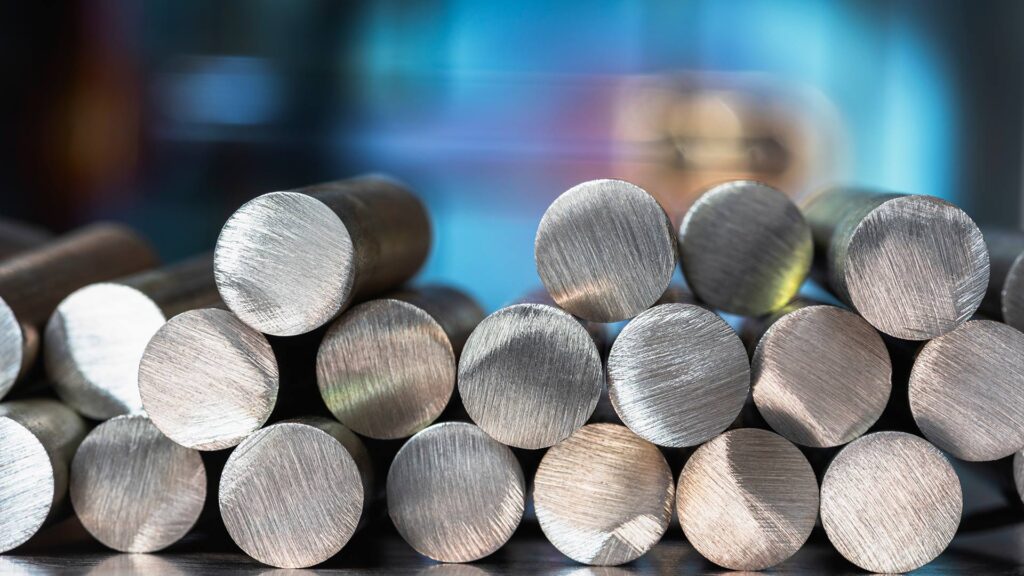
West Midlands-based Bowers & Jones specialises in high precision roll tooling equipment and refurbishment services. It manufactures tools used to roll long products such as welded and seamless tube and pipe, steel sections and complex copper extrusions and more recently its rolls have been used in the manufacture of non-steel applications including electrical conduction and heating cable.
The company has won various industry awards including the King’s Award for Enterprise in the international trade category last year, recognising its growth in exports with 80% of sales now coming from international markets.
Earlier this year, Bowers & Jones was crowned Business Growth & Strategy winner at the Make UK National Manufacturing Awards.
Managing Director, Jane Sommerville, explains that until relatively recently, exports to the US accounted for more than half of its international business and 40% of total sales and says the company’s success in growing its North American business was a major factor in securing the King’s Award for Enterprise.
But the confusion around trade tariffs that followed ‘Liberation Day’ put a major spanner in the works. “We cannot offer a fixed delivered price to any of our US customers because of the total lack of clarity and certainty around tariffs,” says Sommerville, adding that she has no confidence that there will be more certainty around tariff levels in the near to medium term.
To offset lower sales to the US, Bower Jones has been looking to expand its domestic sales through the development of a new product for the aerospace and defence market.
“We were approached by a local aerospace company to help them improve their manufacturing processes,” says Sommerville. “They have a lot of jigs and fixtures made out of steel and wood, which runs the risk of what is called foreign object debris. We are in the process of doing that and have reached out to a number of other companies in this space and there seems to be quite a lot of interest.”
In a speech to a conference on international trade last month, British Chambers of Commerce president Andy Haldane noted that global tariffs have been raised to their highest levels since the 1930s and that the accompanying uncertainty about where they might go next is just as damaging, describing it as a tax on trade and growth.
He referred to research suggesting that a one percentage point rise in tariffs results in a fall in productivity of between 0.5% and 2.5%, which he described as a sobering statistic in light of a ten percentage point rise in global tariffs over the past year.
One-third of the companies surveyed by the British Chambers of Commerce following the tariffs threatened in January said they would be affected by the proposed import duty, with one-in-eight of those businesses planning a strategic shift to reduce exposure to the US market.
According to the industry group’s Head of Research, David Bharier, for many firms it no longer feels like a discrete trade dispute but just another episode in a rolling cycle of tariff threats.