Insight & Analysis

Global Equity Study 2026

Published: Jul 2026

Tracking 13 years of global equity

This year’s Global Equity Study reveals the importance of mental health support and allyship. However, perceptions on pay and equity have not yet achieved gender parity.

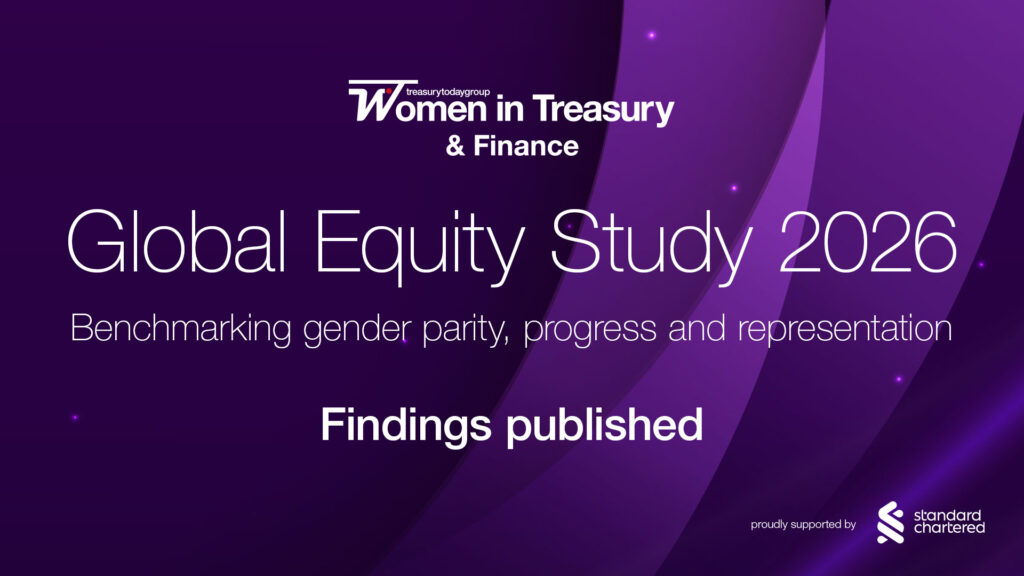
Women in Treasury & Finance Global Equity Study 2026 proudly supported by Standard Chartered – benchmarking gender parity, progress and representation – findings published

This year’s Global Equity Study, proudly supported by Standard Chartered, explores four key themes to allow for a greater understanding and more in-depth analysis of equity in corporate finance.

Those include the intersection of age with gender and other aspects of identity, bringing men on board for equity, mental health and wellbeing, and the support offered to differently abled and neurodivergent individuals in the workplace.

Alongside these, consistent and sometimes controversial themes continue to define this space year on year. Those include opportunity and pay parity, quotas, flexibility and the tools essential for career advancement.

While compelling and important, data alone does not create change. It is the insights, outlined with personal stories from the lived experiences of people navigating these issues every day, that shine a light on what equity looks like in practice and what still needs to shift.

However, despite some very public moves to deemphasise the need for diversity, equity and inclusion (DEI) in the corporate world over the past few years, 78% of respondents felt that greater diversity drives better performance. The majority, 81%, felt that their company’s approach to DEI was either extremely favourable or favourable.

In keeping with the focus on human experiences, this year’s report extensively examined the mental health and wellbeing of all respondents in response to the challenging environment in which corporates are operating. The results were sobering.

Overall, 12% of respondents report having had a mostly or very challenging year for their mental health. Meanwhile, 20% say they have never discussed wellbeing within their team or organisation, and 35% feel uncomfortable discussing mental health at work or prefer not to do so.

However, the report also explored men’s wellbeing and their access to mental health support as contrasted with female and non-binary colleagues. There seem to be immense benefits men can gain from belonging to communities focused on sharing, vulnerability and growth, and a powerful role that men need to play for equity to be achieved.

Gender and ethnic parity remain constant topics, and as the report seeks to increase male participation, differences in perception are becoming more apparent.

For example, just 24% of women believe they are paid equally to male colleagues at a similar level. However, only 73% of men share this view.

Purple quote marks

At Standard Chartered, diversity is integral to innovation and long-term success – and we are proud to continue supporting this study to advance meaningful change across the industry.

Michael Spiegel, Global Head of Transaction Banking at Standard Chartered

Michael Spiegel, Global Head of Transaction Banking at Standard Chartered

The need for quotas, specifically for representation on boards, was also revealed as a high concern. 55% of respondents believe there should be a quota for women and 36% for ethnic diversity.

However, there were rays of hope. 58% of respondents reported that their organisation provided tools, support or encouragement for male colleagues to engage in diversity, equity and inclusion

In addition to formal workplace tools, those surveyed placed a high value on allyship. Nearly 90% of respondents describe allyship as ‘supporting colleagues when they need it’, 65% as ‘speaking up for others’ and 74% as ‘creating an inclusive environment’. While 56% reported experiencing both giving and receiving allyship.

Workplace culture and approaches to flexibility also remain in flux. Nearly 50% of respondents believe flexible working plays an important role in DEI. However, among those without children or dependants, nearly 30% believe these employees receive less flexibility.

However, 78% of respondents believe it is very important that men have access to longer, better parental leave and related considerations.

This year’s report is derived from the most diverse representation to date. Younger professionals were well represented, with 15% under 34 and 3% under 24.

68% of those surveyed identified as female, 30% as male, and 1% as non-binary. More than half, 58%, have worked in treasury for over 15 years. However, good representation also emerged among relative newcomers to treasury, with 11% having worked for under six years.

This global survey gathered responses from the Americas (19%), Asia Pacific (29%), and the UK, Europe, the Middle East, and Africa (52%). 46% of respondents identified as white, 37% as Asian, 7% as Black, and 7% as mixed or another ethnicity.

Sadly, 58% of respondents have felt excluded from networking or social events on the basis of gender, with 31% on the basis of age and 29% on the basis of ethnicity.

When it comes to intersectional experiences, only 22% of workplaces offer support and awareness around the menopause, which is alarmingly low given the well-documented evidence of its impact.

On the positive side, 67% work for companies that promote an inclusive culture for people with disabilities. While 31% work for an organisation that actively supports their neurodivergent employees – this in particular is a space in which awareness seems to be rapidly improving

Explore the full findings in our interactive pdf and keep an eye out on our Global Equity Study webpage or follow us on LinkedIn for updates on next year’s study so you can ensure your voice is heard.
Join our global community

Creating a free account helps us to understand our community better, and tailor our content and events to suit your needs. You can unsubscribe at any time.

Already have an account? Sign in

Search for your company; if not found, select 'Other' and enter it manually below
  • • At least 8 characters
  • • At least 1 uppercase letter (A-Z)
  • • At least 1 lowercase letter (a-z)
  • • At least 1 digit (0-9)