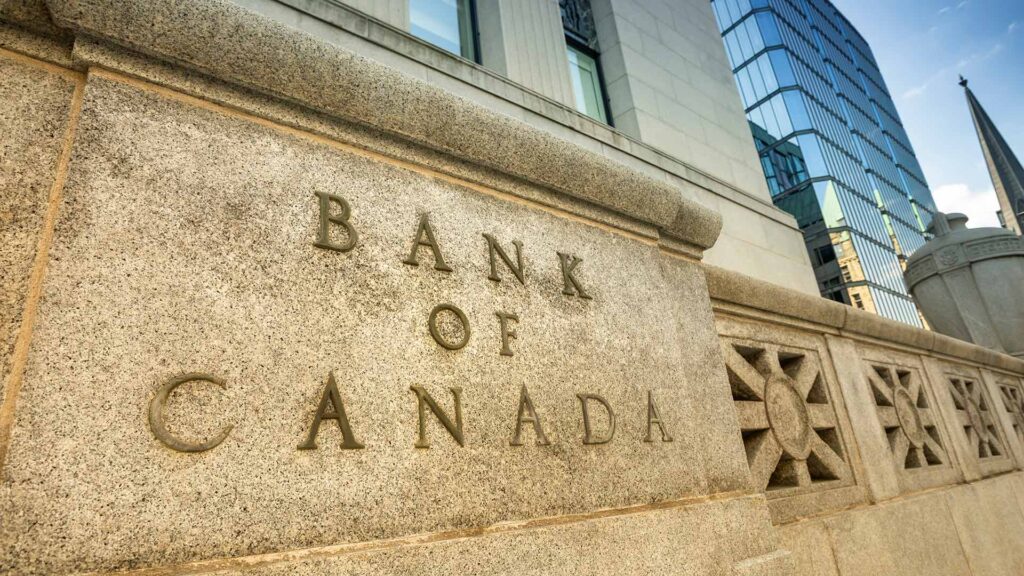
After expanding its oversight of retail payments in 2025, Canada’s central bank is participating in a project called “Real-Time Rail” that promises instant clearing and settlement with greater competition among payment providers.
In a December speech, Bank of Canada Governor Tiff Macklem clarified the goals of Real-Time Rail and outlined possibilities for his nation’s stablecoin-enabling legislation after the neighboring United States approved its GENIUS Act earlier in the year.
For the Bank of Canada, it has been a rapid evolution in terms of facilitating fast payment platforms. In 2025, the central bank became more directly involved in monitoring transactions that move through payment service providers (PSPs). Macklem, speaking at the Chamber of Commerce of Metropolitan Montreal on 16th December, specifically mentioned digital wallets, point-of-sale terminals and cross-border money transfers.
“This year, the Bank began overseeing retail payments,” Macklem noted. “The Bank now supervises PSPs to ensure they manage operational risks and safeguard funds held on behalf of Canadian households and businesses, with close to 1,600 PSPs either already registered with the Bank or in the pipeline. This brings PSPs into the regulatory sphere so that Canadians can safely access cheaper payment options and a broader array of services.”
The next stage for the Bank of Canada will be to help modernise and safeguard the newest generation of payment facilitation, both domestically and internationally.
“We want to support innovations in money and payments that serve Canadians,” Macklem said. In 2026 “the Bank will add two more responsibilities: regulating stablecoins and implementing consumer-driven banking.”
Payments Canada, which is responsible for the nation’s clearing and settlement system, calls Real-Time Rail a “new piece of national payment infrastructure that will allow Canadians to send and receive irrevocable, data-rich payments in real time.” It will “allow data to travel with each payment” and promises to encourage real-time liquidity management and to reduce the risk of fraud. Payments Canada expects early use cases to include “real-time rent payments, instant earned wage access and immediate me-to-me payments.”
In the final months of 2025, Payments Canada drafted guides, conducted testing and developed training modules in preparation for the Real-Time Rail rollout.
“This will allow payments to clear and settle instantly, 24/7, 365 days a year – making payments here much more efficient,” Macklem explained in his Montreal speech. “In time it will also allow Canada to link our system to those in other countries so that money can move across borders more quickly. Real-Time Rail will also give PSPs direct access to the payments system, increasing competition and adding efficiency.”
The next frontier for the Bank of Canada is stablecoin. In the US, President Trump signed the GENIUS Act in July, initiating a key regulatory framework needed for stablecoin adoption. Now Canada is due to enact its own stablecoin law.
“In the federal budget last month, the government announced it will do just that, with the Bank of Canada as the regulator,” Macklem said. “The proposed Stablecoins Act will regulate stablecoin issuers, and the retail payments legislation will be amended so that it also applies to stablecoin payments. The goal is to ensure Canadians can leverage the innovation of stablecoins and do so safely.”
Macklem mentioned “a few critical elements” that need to be addressed: “A stablecoin must be pegged at a one-to-one ratio to a central bank currency and be backed by high-quality liquid assets so it can always be converted to cash at par. The conditions for redeeming stablecoins must be fully disclosed, including the timing and any fees that need to be paid. Stablecoins made available for purchase by individuals and businesses in Canada should be assured of these protections. And issuers of stablecoins must have enough operational resilience to make stablecoins reliable.”